



Sistemas de acoplamiento rápido: Guía completa para aplicaciones industriales
Las instalaciones industriales pierden una media del 5-10% del tiempo de producción debido a procedimientos de conexión y desconexión de equipos. Los sistemas de acoplamiento rápido eliminan esta ineficiencia al permitir conexiones sin herramientas que pueden completarse en segundos en lugar de minutos. Estos componentes diseñados con precisión reducen el tiempo de inactividad, evitan la pérdida de fluidos y mejoran la seguridad laboral en aplicaciones hidráulicas, neumáticas y de transferencia de fluidos.
Si quieres optimizar tus operaciones industriales con sistemas de acoplamiento rápido, necesitarás entender los tipos de acoplamiento, las clasificaciones de presión, las tecnologías de sellos, la compatibilidad de materiales y los requisitos específicos de cada aplicación. Esta guía cubre las especificaciones técnicas y los criterios de selección que los ingenieros y responsables de instalación utilizan para especificar acoplamientos rápidos en entornos industriales exigentes.
- 1. ¿Qué son los sistemas de acoplamiento rápido?
- 2. Tipos de acoplamiento rápido por mecanismo de conexión
- 2.1. Acoplamientos rápidos con bloqueo de bola
- 2.2. Acoplamientos rápidos con cierre de manga
- 2.3. Acoplamientos rápidos push-to-connect
- 3. Clasificación por acoplamiento rápido por diseño de cierre
- 3.1. Acoplamientos de doble apagado
- 3.2. Acoplamientos de apagado simple
- 3.3. Acoplamientos directos
- 4. Materiales de acoplamiento rápido y compatibilidad química
- 4.1. Acoplamientos rápidos de acero inoxidable
- 4.2. Acoplamientos de latón y acero chapado
- 4.3. Acoplamientos plásticos diseñados
- 5. Acoplamientos rápidos estándar ISO 7241 e ISO 16028
- 6. Criterios de selección de acoplamiento rápido
- 6.1. Consideraciones sobre caudal y caída de presión
- 6.2. Fuerzas de conexión y desconexión
- 7. Aplicaciones de acoplamiento rápido por industria
- 7.1. Maquinaria móvil y construcción
- 7.2. Procesamiento de alimentos y bebidas
- 7.3. Aire comprimido y sistemas neumáticos
- 8. Seguridad y mantenimiento de acoplamientos rápidos
- 8.1. Desactivación a presión antes de la desconexión
- 8.2. Intervalos regulares de inspección y reemplazo
- 9. Análisis de costes y retorno del investimento de los sistemas de acoplamiento rápido
- 10. Tecnologías avanzadas de acoplamiento rápido
- 10.1. Sistemas de Multiacoplamiento
- 10.2. Acoplamientos compensados por temperatura y de separación
- 11. Preguntas frecuentes
- 11.1. ¿Cuál es la diferencia entre acoplamientos rápidos y desconexiones rápidas?
- 11.2. ¿Se pueden conectar acoplamientos rápidos bajo presión?
- 11.3. ¿Cómo se evitan fugas de acoplamiento rápido?
- 11.4. ¿Qué tamaño de acoplamiento rápido necesito para mi aplicación?
- 11.5. ¿Merecen la pena los acoplamientos rápidos de acero inoxidable por el coste extra?
- 11.6. ¿Con qué frecuencia deben reemplazarse los acoplamientos rápidos?
- 12. Conclusión
¿Qué son los sistemas de acoplamiento rápido?
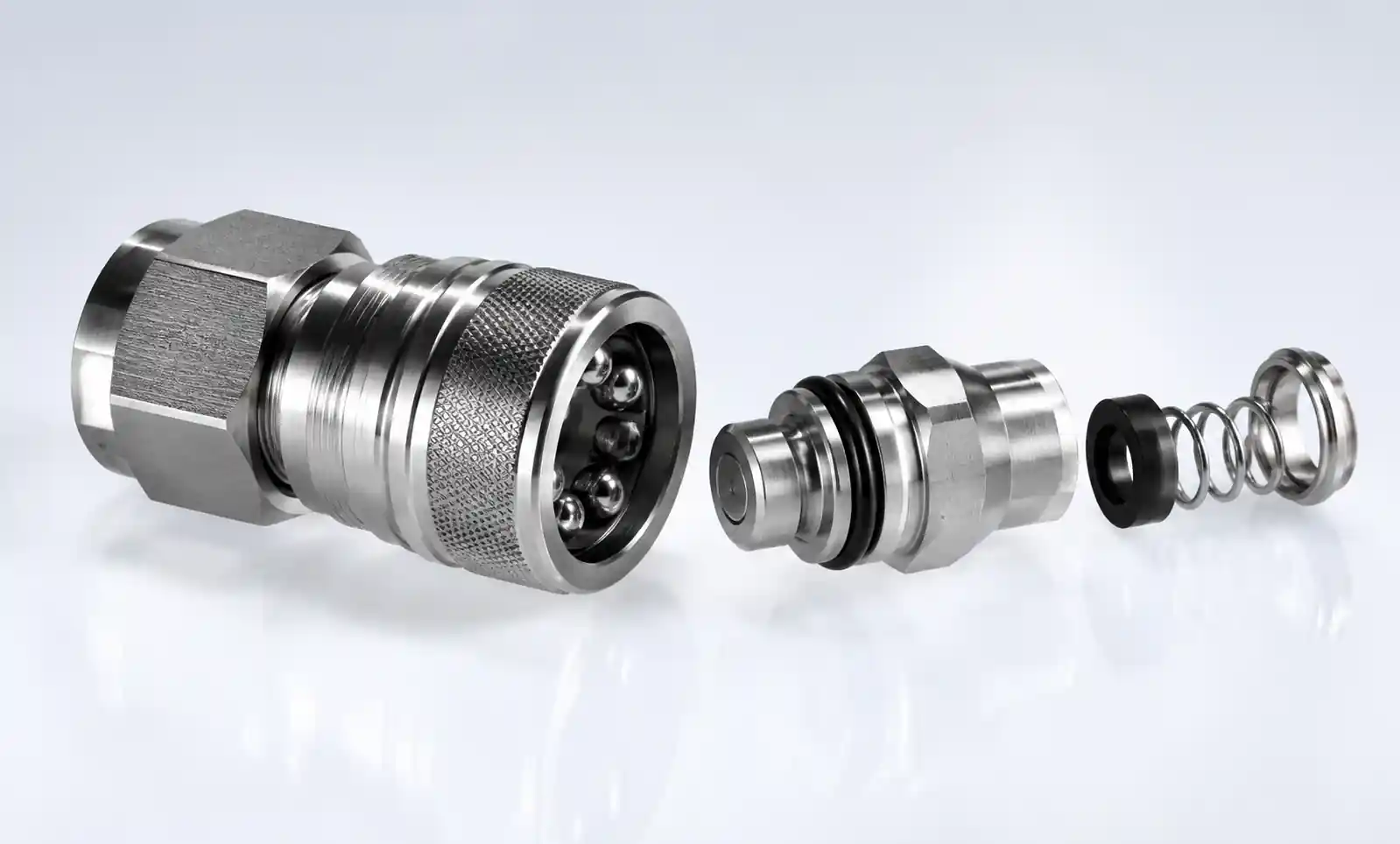
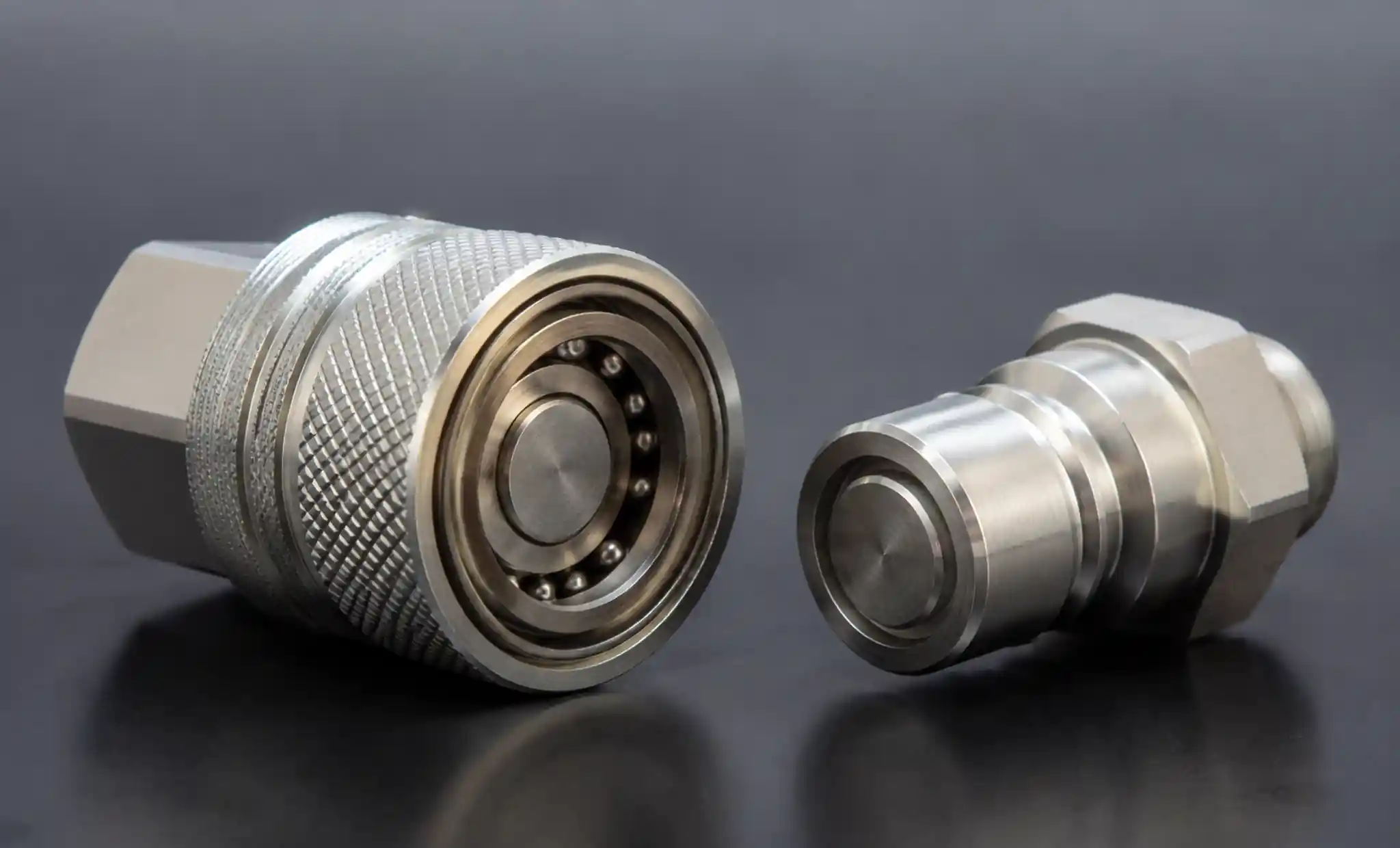
Los sistemas de acoplamiento rápido son dispositivos mecánicos de precisión diseñados para la conexión y desconexión rápidas y sin herramientas de líneas de fluidos, líneas de aire y circuitos hidráulicos. Estos acoplamientos constan de dos componentes principales: un cuerpo (hembra) y un tapón (macho) que se bloquean mediante mecanismos con resorte, rodamientos de bolas o diseños de manguito.
El mecanismo de acoplamiento proporciona un sellado seguro y hermético bajo presión, permitiendo la desconexión instantánea cuando es necesario. Los acoplamientos rápidos modernos incorporan válvulas de cierre automáticas en ambos lados que se cierran inmediatamente al desconectar, evitando la pérdida de fluidos y la intrusión de aire. Esta función de doble cierre es fundamental para mantener la limpieza del sistema y prevenir la contaminación en aplicaciones hidráulicas y neumáticas.
! 1-componentes del sistema de acoplamiento rápido Sistema de acoplamiento rápido que muestra componentes del cuerpo y del bujón con mecanismo interno
Se pueden especificar sistemas de acoplamiento rápido para aplicaciones que van desde 0 hasta 10.000 psi (690 bar) de presión de trabajo, con capacidades de flujo de 0,5 a 300 GPM dependiendo del tamaño y diseño del acoplamiento. Los tamaños estándar de conexión varían desde configuraciones de roscas NPT, BSP o SAE de 1/4" hasta 2", con tamaños personalizados disponibles para aplicaciones especializadas.
Tipos de acoplamiento rápido por mecanismo de conexión
Acoplamientos rápidos con bloqueo de bola
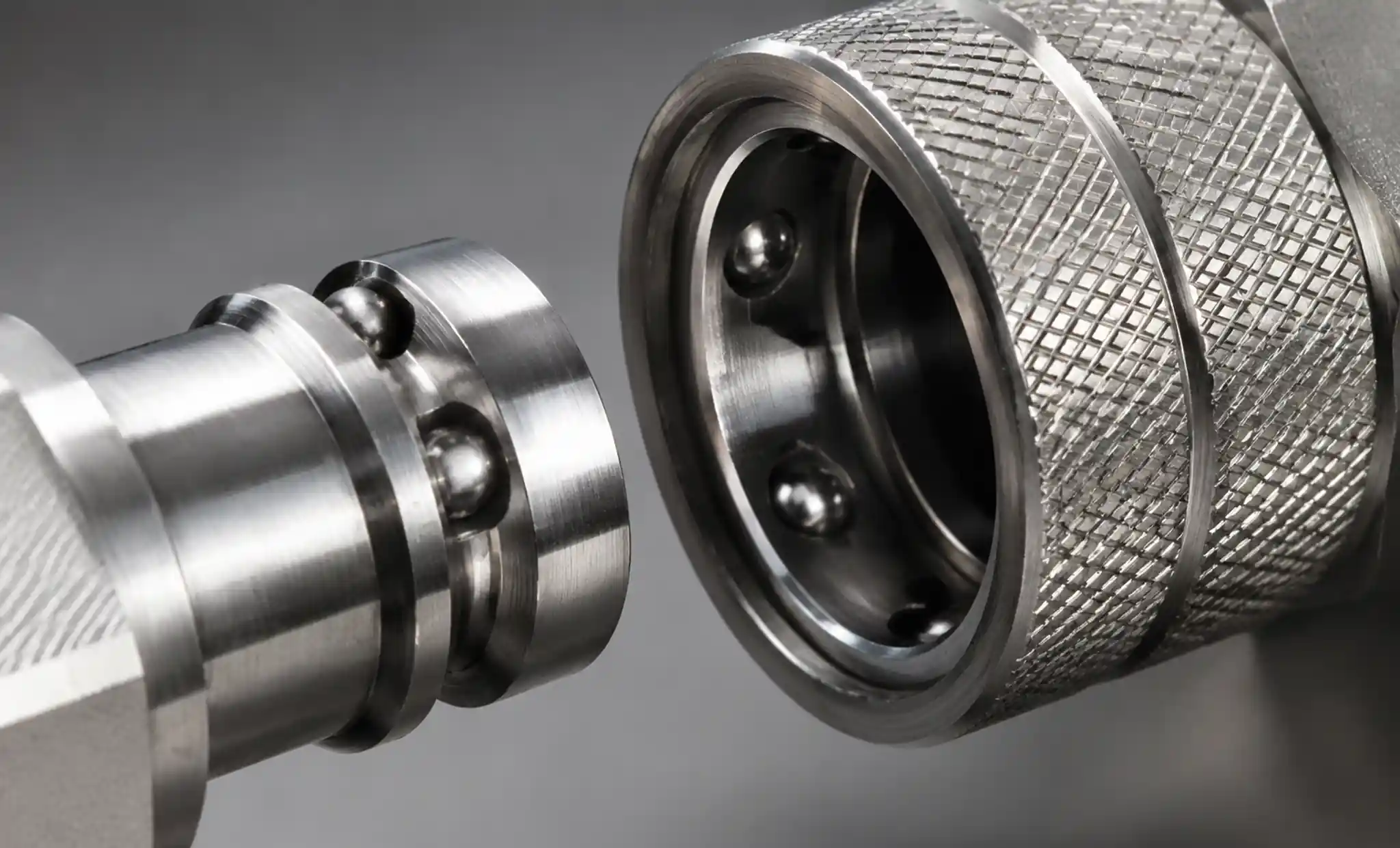
Los acoplamientos de bloqueo de bola utilizan bolas de acero endurecido que se insertan en una ranura del tapón para crear un bloqueo mecánico. Cuando introduces el conector en el cuerpo, las bolas se acoplan automáticamente y bloquean la conexión. Para desconectar, se retira la funda exterior para liberar las bolas de la ranura.
Estos acoplamientos proporcionan una alta resistencia al tirón y pueden soportar presiones de trabajo de hasta 5.000 psi (345 bar) en aplicaciones hidráulicas. El mecanismo de bloqueo positivo evita la desconexión accidental bajo condiciones de vibración o carga lateral. Los diseños de bloqueo de bola se utilizan ampliamente en hidráulica móvil, maquinaria agrícola y maquinaria de construcción, donde la fiabilidad bajo condiciones adversas es crítica.
! Mecanismo de acoplamiento de 2 bolas Acoplamiento rápido con bloqueo de bola con bolas de acero endurecido y mecanismo de ranura
Acoplamientos rápidos con cierre de manga
Los acoplamientos de bloqueo de manguito cuentan con una manga deslizante que se mueve hacia adelante para conectar y hacia atrás para desconectar. El mecanismo interno utiliza la presión del muelle para mantener la posición bloqueada durante la operación. Este diseño ofrece velocidades de conexión más rápidas en comparación con los tipos de bloqueo por bola, con tiempos de conexión inferiores a 2 segundos.
Debe especificar acoplamientos de bloqueo de manga para aplicaciones que requieran conexiones y desconexiones frecuentes, como bancos de pruebas, líneas de producción y operaciones de transferencia de fluidos. Estos acoplamientos manejan presiones de hasta 3.000 psi (207 bar) y proporcionan excelentes características de flujo con una caída de presión mínima a través del acoplamiento.
Acoplamientos rápidos push-to-connect
Los acoplamientos push-to-connect son el tipo de conexión más rápido, requiriendo solo un empujón recto para encenderse. Los pinchos internos o juntas tóricas sujetan automáticamente el tapón al insertarse. La desconexión requiere pulsar un botón de liberación o collar mientras se tira del enchufe.
Estos acoplamientos son ideales para sistemas neumáticos, aplicaciones de fluidos a baja presión y líneas de aire comprimido que operan a 0-300 psi (21 bar). El mecanismo de conexión sencillo reduce los requisitos de formación del operador y minimiza los errores de instalación. Puedes usar acoplamientos push-to-connect con tubos de plástico o metal en tamaños que van de 1/4" a 1" de diámetro exterior.
Clasificación por acoplamiento rápido por diseño de cierre
Acoplamientos de doble apagado
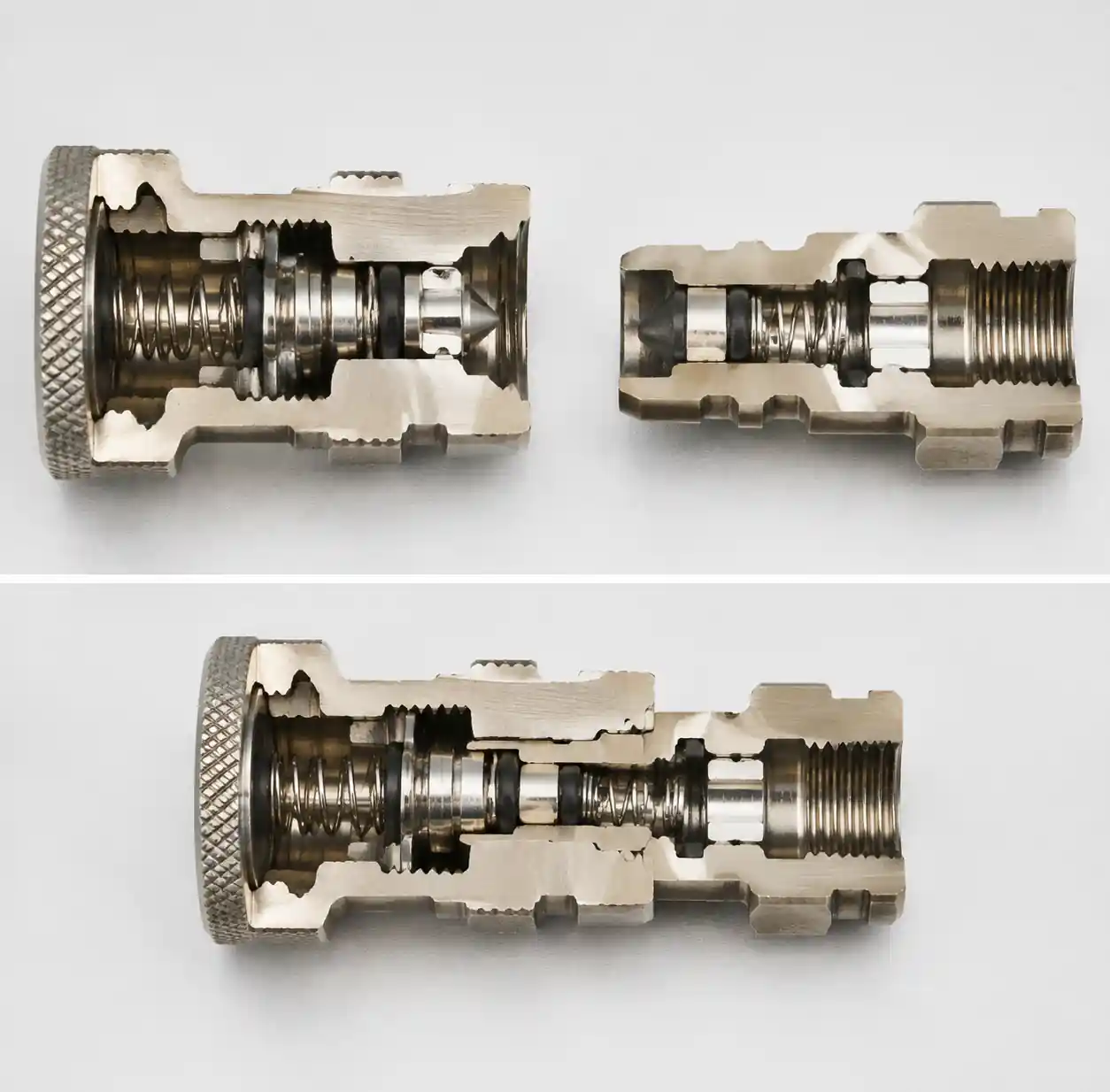
Los acoplamientos rápidos de doble cierre incorporan válvulas automáticas tanto en el cuerpo como en el tapón que se cierran inmediatamente al desconectarse. Este diseño previene el vertido de fluidos y la intrusión de aire, lo que lo hace esencial para sistemas hidráulicos, transferencia química y aplicaciones donde la pérdida de fluidos es inaceptable.
Cuando conectas acoplamientos de doble corte, ambas válvulas se abren simultáneamente para permitir el flujo. Al desconectarse, los bombuchos o válvulas de bola con resorte sellan ambos extremos en milisegundos. Este diseño mantiene la presión del sistema y previene la contaminación, lo cual es fundamental para circuitos hidráulicos donde la entrada de aire puede causar degradación del rendimiento y daños en componentes.
! 3-doble corte de corte-cruzado-transversal Acoplamiento rápido de doble cierre mostrando válvulas de poppet internas en ambas mitades
Debes especificar acoplamientos de doble cierre para hidráulica móvil, industrias de procesos y cualquier aplicación donde se requiera protección ambiental o recuperación de fluidos. Estos acoplamientos suelen tener caídas de presión ligeramente mayores (2-5 psi) en comparación con los diseños de paso directo debido a los mecanismos internos de válvula.
Acoplamientos de apagado simple
Los acoplamientos de cierre simple cuentan con una válvula automática en un lado (normalmente en la carrocería), mientras que el otro lado permanece abierto. Esta configuración reduce la caída de presión y mejora el rendimiento del flujo, lo que la hace adecuada para aplicaciones de alto caudal donde es aceptable cierto derrame de fluido al desconectarse.
Estos acoplamientos se utilizan comúnmente en fumigación agrícola, sistemas de refrigeración industrial y aplicaciones donde el punto de desconexión está en una ubicación de drenaje. El diseño de cierre simple ofrece un rendimiento de flujo entre un 30 y un 40% mejor en comparación con los tipos de cierre doble del mismo tamaño.
Acoplamientos directos
Los acoplamientos rápidos directos no tienen válvulas internas, proporcionando un flujo irrestricto con una caída de presión mínima. Ambos lados permanecen abiertos en todo momento, lo que significa que el líquido se drenará de la línea al desconectarse. Este diseño ofrece la mayor capacidad de caudal y la menor caída de presión, lo que lo hace ideal para sistemas alimentados por gravedad, aplicaciones de drenaje y transferencia de fluidos no críticos.
Puedes usar acoplamientos directos para sistemas de refrigeración por agua, aplicaciones de lavado y cualquier escenario donde maximizar el flujo sea más importante que evitar derrames. Estos acoplamientos ofrecen caudales entre un 50 y un 60% superiores a los diseños equivalentes de doble cierre.
Materiales de acoplamiento rápido y compatibilidad química
| Material | Clasificación de presión | Rango de temperatura | Resistencia química | Aplicaciones típicas |
|---|---|---|---|---|
| Acero inoxidable 316 | Hasta 10.000 psi | -40°F a 400°F | Excelente - ácidos, cloruros, agua de mar | Procesamiento químico, marino, alimentario/farmacéutico |
| Latón (cromado) | Hasta 3.000 psi | 0°F a 200°F | Bien - aire, agua, aceites ligeros | Neumáticos, industrial general, herramientas neumáticas |
| Acero al carbono | Hasta 6.000 psi | -20°F a 250°F | Moderado - requiere emplatado | Hidráulica móvil, maquinaria de construcción |
| Aluminio | Hasta 1.500 psi | -20°F a 200°F | Bien - aire, combustible, líquidos ligeros | Aplicaciones neumáticas, de transferencia de combustible, ligeras |
| Polipropileno/PVDF | Hasta 150 psi | 32°F a 180°F | Excelente - ácidos, bases, disolventes | Transferencia química, equipos de laboratorio, fluidos corrosivos |
Acoplamientos rápidos de acero inoxidable
Los acoplamientos rápidos 316 de acero inoxidable ofrecen una resistencia superior a la corrosión y son la opción estándar para el procesamiento de alimentos, la fabricación farmacéutica y la manipulación química. El material resiste las picaduras y la corrosión en grietas en ambientes de cloruro, lo que lo hace adecuado para aplicaciones de agua de mar y salmuera.
Estos acoplamientos cumplen con los requisitos de contacto alimentario de la FDA y las normas sanitarias 3-A cuando se especifican con acabados electropulidos. Debes especificar acoplamientos de acero inoxidable para cualquier aplicación que implique productos químicos corrosivos, procesos de alta pureza o donde deba evitarse la contaminación de materiales. La alta relación resistencia-peso del material permite diseños compactos que soportan presiones de hasta 10.000 psi (690 bar).
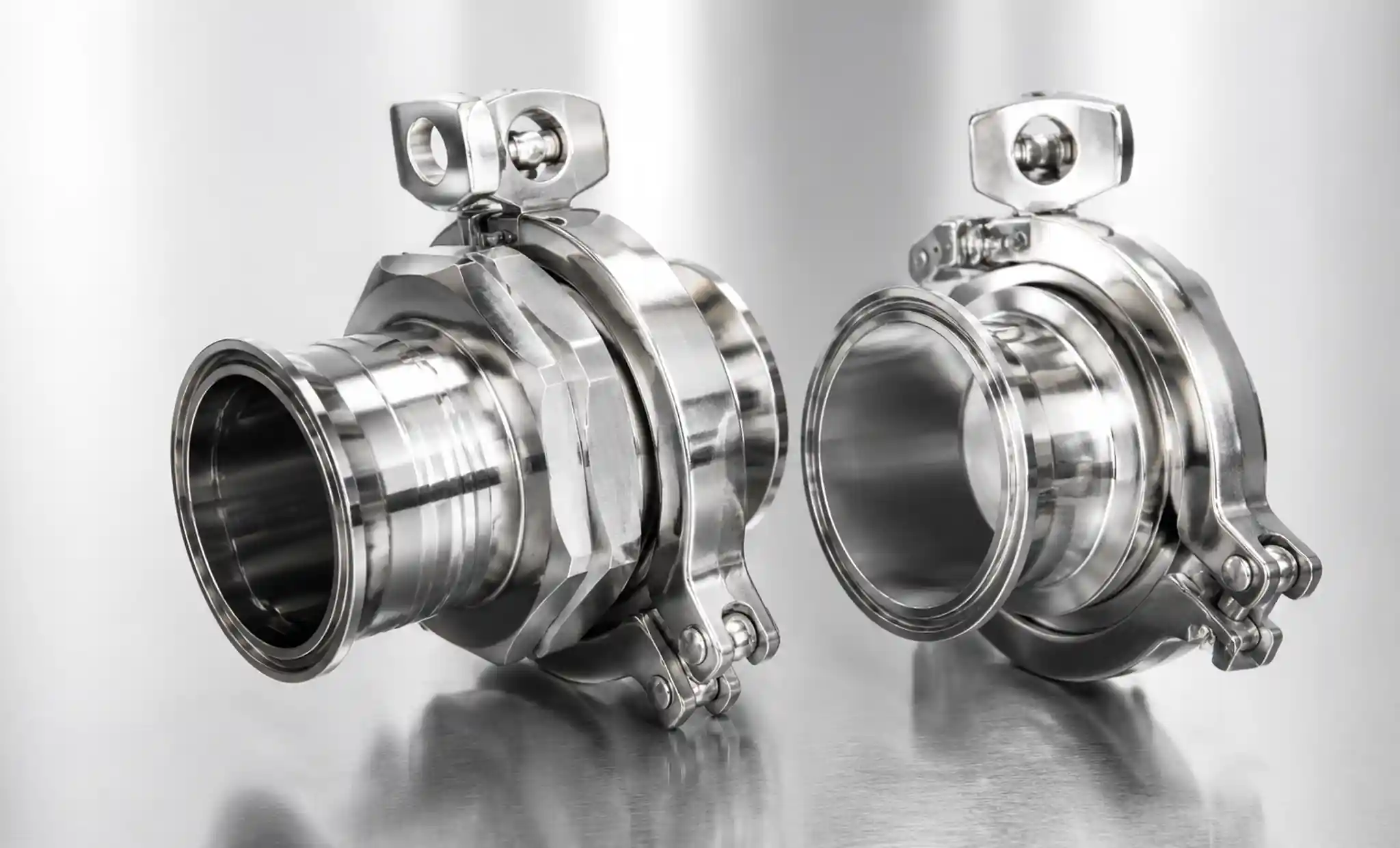
! 4-acoplamiento sanitario de acero inoxidable Acoplamiento rápido sanitario 316 de acero inoxidable para aplicaciones de procesamiento de alimentos
Acoplamientos de latón y acero chapado
Los acoplamientos rápidos de latón ofrecen excelente mecanizabilidad y buena resistencia a la corrosión a un coste económico. El latón cromado proporciona una mayor resistencia al desgaste y mantiene su apariencia en entornos industriales. Estos acoplamientos son el estándar industrial para sistemas de aire comprimido, herramientas neumáticas y aplicaciones industriales generales.
Debes evitar los acoplamientos de latón en fluidos que contienen amoníaco debido al riesgo de grietas por corrosión por estrés. Para aceite hidráulico, glucol acuático y fluidos derivados del petróleo, los acoplamientos de latón funcionan de forma fiable a presiones de hasta 3.000 psi (207 bar). La lubricidad natural del material reduce el desgaste en aplicaciones frecuentemente conectadas.
Acoplamientos plásticos diseñados
Los acoplamientos rápidos de polipropileno y PVDF (fluoruro de polivinilifeno) destacan en el manejo de productos químicos agresivos que corroen metales. Estos materiales resisten ácidos concentrados, bases y disolventes orgánicos manteniendo la integridad estructural. Los acoplamientos de plástico pesan entre un 70 y un 80% menos que los diseños metálicos equivalentes, reduciendo la fatiga del operador en operaciones manuales.
Las limitaciones de presión de los acoplamientos plásticos (normalmente un máximo de 150 psi) restringen su uso a la transferencia química a baja presión, manipulación de fluidos en laboratorio y aplicaciones de muestreo de procesos. Se pueden especificar acoplamientos PVDF para funcionamiento continuo a temperaturas de hasta 280°F (138°C), lo que los hace adecuados para procesos químicos calientes.
Acoplamientos rápidos estándar ISO 7241 e ISO 16028
Las series ISO 7241 A y B definen los requisitos dimensionales y de rendimiento para acoplamientos rápidos hidráulicos que operan a presiones de hasta 350 bar (5.075 psi). Estas normas internacionales garantizan la intercambiabilidad entre fabricantes, permitiendo mezclar mitades de diferentes proveedores en el mismo sistema.
Los acoplamientos de la Serie A cuentan con mecanismos de cierre de válvula de palanca y están diseñados para hidráulica móvil agrícola e industrial. Los acoplamientos de la Serie B utilizan diseños de sellado de cara plana que minimizan el derrame de fluido al desconectarse a menos de 3 ml por acoplamiento. Debes especificar acoplamientos planos ISO 16028 para aplicaciones ambientalmente sensibles donde la pérdida de fluido debe minimizarse.
! 5-ISO-cara plana-acoplamiento hidráulico ISO 16028 acoplamiento rápido hidráulico de cara plana para equipos móviles
Los acoplamientos ISO estándar proporcionan especificaciones de caída de presión, clasificaciones de presión de explosión y tolerancias dimensionales que facilitan el diseño del sistema. Cuando diseñas circuitos hidráulicos con acoplamientos de estándar ISO, puedes predecir de forma fiable las pérdidas de presión y garantizar la compatibilidad con los estándares internacionales de equipos.
Criterios de selección de acoplamiento rápido
Consideraciones sobre caudal y caída de presión
El tamaño del acoplamiento afecta directamente al rendimiento del flujo y a la eficiencia del sistema. Los acoplamientos de tamaño inferior generan una caída de presión excesiva, reduciendo el rendimiento del actuador y aumentando el consumo energético. Debes calcular la caída de presión usando la fórmula: ΔP = (Q/Cv)² × SG, donde Q es el caudal (GPM), Cv es el coeficiente de flujo y SG es la gravedad específica.
Para sistemas hidráulicos, limitar la caída de presión entre acoplamientos al 5% de la presión del sistema para mantener la eficiencia. Un acoplamiento rápido de 3/4" suele tener un Cv de 15-25, proporcionando un caudal de 30 GPM con una caída de presión de 8-12 psi a viscosidad del aceite hidráulico. Subir a acoplamientos de 1" (Cv 35-50) reduce la caída de presión a 2-4 psi al mismo caudal.
Fuerzas de conexión y desconexión
Los acoplamientos rápidos deben conectarse solo con presión manual, requiriendo normalmente una fuerza de inserción de 10-40 lbf (45-180 N). Fuerzas más altas provocan fatiga del operador y aumentan el tiempo de conexión. Deberías evaluar los requisitos de fuerza de conexión en función de la frecuencia con la que los operadores conectarán el acoplamiento y si se usará en aplicaciones aéreas o en espacios confinados.
Los requisitos de fuerza de desconexión varían según el diseño: los tipos de bloqueo de manga requieren 5-15 lbf (22-67 N), mientras que los diseños con bloqueo de bola requieren 15-30 lbf (67-134 N) para liberarse. Para aplicaciones robóticas o automatizadas, especifica acoplamientos con fuerzas de actuación consistentes y predecibles que se ajusten a las capacidades de tu equipo de automatización.
Aplicaciones de acoplamiento rápido por industria
| Industria | Aplicación principal | Tipo de acoplamiento | Especificaciones típicas | Requisitos clave |
|---|---|---|---|---|
| Hidráulica móvil | Cambio de acoplamiento de equipo | ISO 7241-B cara plana | 1/2" a 1", 4.000-5.000 psi | Derrame mínimo, alta presión |
| Procesamiento de alimentos | Conexiones del sistema CIP | Acero inoxidable, sanitario | 3/4" a 2", 150-300 psi | Diseño limpio y conforme a la FDA |
| Procesamiento químico | Operaciones de transferencia de tambor | PVDF/PP, doble apagado | 1/2" a 1", 50-150 psi | Resistencia química, sin contaminación |
| Aire comprimido | Conexión de herramientas y equipos | Latón, cerradura de empuje | 1/4" a 1/2", 150-300 psi | Conexión rápida, durabilidad |
| Prueba y Medición | Conexión de sensores e instrumentos | Acero inoxidable, miniatura | 1/8" a 3/8", 3.000-10.000 psi | Precisión, repetibilidad |
Maquinaria móvil y construcción
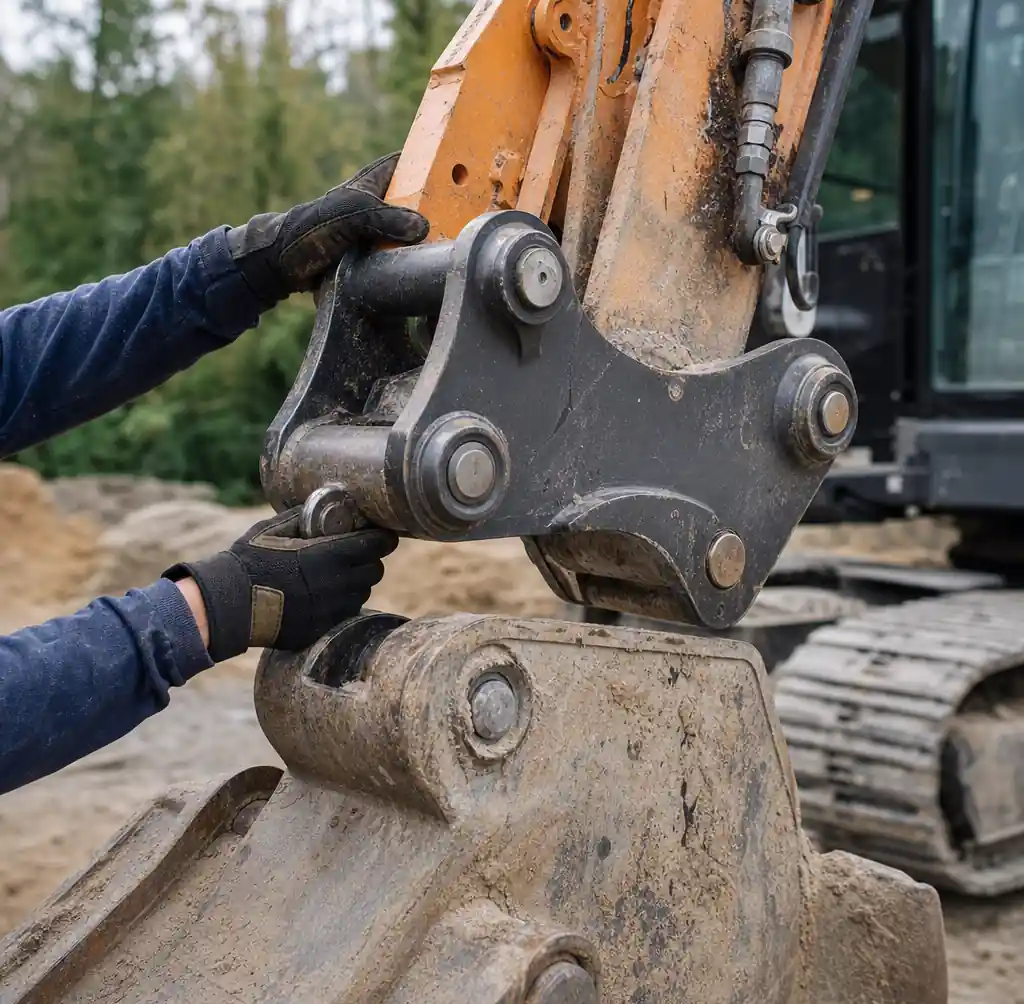
El equipo hidráulico móvil requiere acoplamientos rápidos de cara plana ISO 16028 que minimizan la pérdida de fluido durante los cambios de fijación. Estos acoplamientos se conectan bajo presión residual (hasta 350 bar) y evitan la entrada de suciedad gracias a su diseño protector de cara plana. Puedes cambiar los accesorios hidráulicos de excavadoras, cargadoras y tractores agrícolas en menos de 30 segundos usando acoplamientos planos correctamente especificados.
! 6-equipo-móvil-conexión-hidráulica Conexión de acoplamiento rápido en el punto de sujeción hidráulico de la excavadora
Las caras de acoplamiento se sellan entre sí antes de que se abran las válvulas internas, creando una conexión limpia que evita la contaminación. Este diseño extiende la vida útil del fluido hidráulico entre un 40 y un 60% en comparación con los acoplamientos convencionales que permiten la entrada de suciedad durante la conexión. Cuando especifiques acoplamientos de cara plana para equipos móviles, asegúrate de que tengan superficies de sellado endurecidas con un mínimo de 1 millón de ciclos de conexión.
Procesamiento de alimentos y bebidas
Los acoplamientos rápidos sanitarios en aplicaciones de procesamiento de alimentos deben cumplir con los requisitos de materiales de la FDA 21 CFR 177 y los estándares sanitarios 3-A. Estos acoplamientos cuentan con superficies de acero inoxidable electropulido con valores de Ra inferiores a 0,8 μm (32 micropulgadas) para evitar el crecimiento bacteriano. Debes especificar acoplamientos con materiales de junta homologados para productos de limpieza CIP y temperaturas de hasta 200°F (93°C).
Los acoplamientos rápidos de tri-clamp y DIN permiten un cambio rápido entre etapas de producción manteniendo condiciones higiénicas. El diseño sin grietas elimina las patas muertas donde podrían colonizarse bacterias. Para aplicaciones lácteos, de bebidas y farmacéuticas, especifica acoplamientos que puedan desmontarse completamente para su inspección y validación.
Aire comprimido y sistemas neumáticos
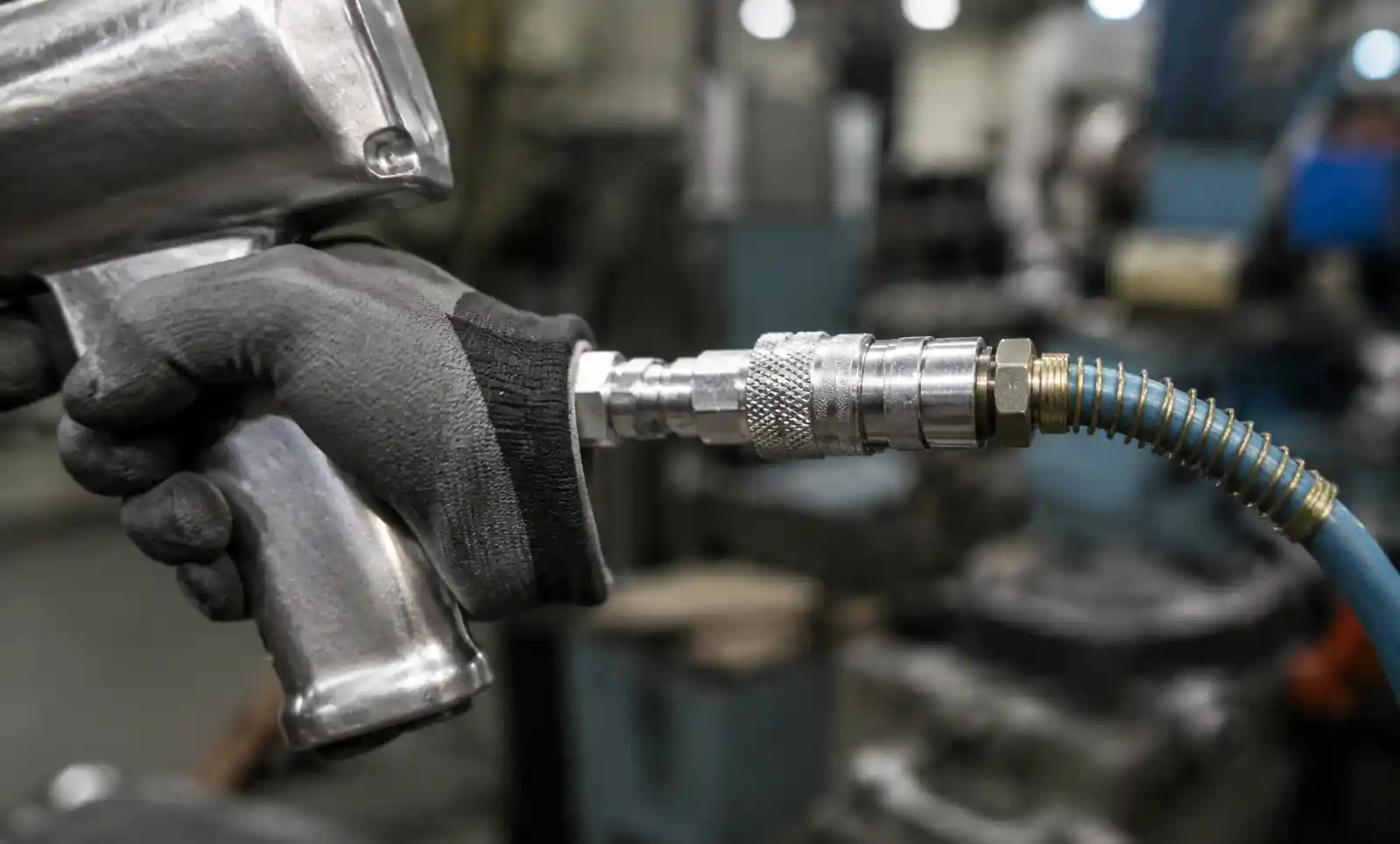
Los sistemas industriales de aire comprimido utilizan acoplamientos rápidos en cada punto de conexión de herramientas, caída de aire e interfaz del equipo. Los acoplamientos industriales estándar (Tipo D) son los más comunes, proporcionando un servicio fiable a una presión de trabajo de 150-300 psi (10-21 bar). Estos acoplamientos de latón gestionan las frecuentes conexiones requeridas en entornos de fabricación, con vidas útiles que superan los 100.000 ciclos de conexión.
! 7-acoplamiento de herramientas de aire comprimido Acoplamiento rápido industrial de aire comprimido conectado a una herramienta neumática
Deberías considerar acoplamientos de alto caudal con grandes conductos de diámetro para aplicaciones que requieran máxima entrega de aire, como llaves de impacto y cilindros grandes. Los acoplamientos estándar pueden restringir el flujo de aire entre un 30 y un 40% en comparación con la manguera de suministro, mientras que los diseños de alto flujo reducen esta restricción al 10-15%. Cuando especifiques acoplamientos rápidos neumáticos, ajusta el acoplamiento Cv a los requisitos de CFM de tu herramienta a presión de funcionamiento.
Seguridad y mantenimiento de acoplamientos rápidos
Desactivación a presión antes de la desconexión
Nunca desconectes los acoplamientos rápidos bajo presión total del sistema a menos que estén específicamente diseñados para desconexión bajo presión. Los acoplamientos estándar deben desconectarse a presión cero para evitar salpicaduras peligrosas de fluido, eyección del acoplamiento y daños en componentes. Los acoplamientos de cara plana ISO 16028 están diseñados para desconectarse bajo presión residual de hasta 30 bar (435 psi) e incorporan mecanismos de alivio de presión.
Cuando diseñes sistemas hidráulicos, incorpora válvulas de alivio de presión cerca de los puntos de conexión de acoplamiento para permitir una desactivación segura antes de la desconexión. Para los sistemas de aire, incluye válvulas de cierre aguas abajo para que la presión de la línea pueda purgarse antes de la desconexión del acoplamiento. No despresurizar puede provocar que los cuerpos acoplados se separen violentamente, creando peligros de proyectiles y lesiones por inyección de fluidos.
Intervalos regulares de inspección y reemplazo
Los sellos de acoplamiento rápido y los componentes internos se desgastan con ciclos de conexión repetidos. Debes establecer intervalos de inspección según la frecuencia de conexión: los acoplamientos de alto uso (20+ ciclos diarios) requieren inspección mensual, mientras que las aplicaciones de uso moderado pueden extenderse a revisiones trimestrales. Durante la inspección, revisa las superficies de sellado en busca de ranuras de desgaste, comprueba que las juntas tóricas estén endurecidas o agrietadas y compruebe que los mecanismos de cierre se acoplen completamente.
Sustituye los acoplamientos cuando el desgaste del sellado cause filtraciones visibles de fluido, cuando la fuerza de conexión aumente significativamente o tras alcanzar los límites de ciclo especificados por el fabricante. Los acoplamientos hidráulicos suelen durar entre 50.000 y 1.000.000 de ciclos, dependiendo de la calidad del diseño y las condiciones de funcionamiento. Puedes alargar la vida útil del acoplamiento entre un 40 y un 50% mediante una filtración adecuada del sistema que evita la entrada de partículas abrasivas.
Análisis de costes y retorno del investimento de los sistemas de acoplamiento rápido
Los sistemas de acoplamiento rápido suelen costar entre 3 y 8 veces más que los accesorios roscados permanentes de tamaño equivalente, pero esta inversión se compensa rápidamente en instalaciones que requieren cambios frecuentes de equipo. Un acoplamiento rápido hidráulico de 3/4" de calidad cuesta entre 45 y 120 dólares por par de acoplamiento, mientras que un conector roscado cuesta entre 8 y 15 dólares. Sin embargo, la conexión roscada requiere entre 15 y 25 minutos para apretar y sellar correctamente, en comparación con 5-10 segundos para un acoplamiento rápido.
En entornos de producción donde el cambio de equipo ocurre a diario, los acoplamientos rápidos reducen el tiempo de inactividad en un 90-95% en comparación con los accesorios roscados. Con un coste laboral de 75 $/hora incluyendo gastos generales, el ahorro de tiempo por sí solo justifica una inversión en acoplamiento rápido en un plazo de 30-60 días tras la instalación. Beneficios adicionales incluyen la reducción del vertido de fluidos (ahorro anual de 200-500 dólares por acoplamiento en aplicaciones hidráulicas), menor fallo relacionado con la contaminación y mejora de la seguridad laboral.
Debe realizar un análisis del coste total de propiedad que incluya mano de obra de instalación, tiempo de conexión/desconexión, pérdida de fluidos, reparaciones relacionadas con la contaminación y potencial de incidentes de seguridad. Para instalaciones con más de 10 puntos de conexión regulares, los acoplamientos rápidos suelen proporcionar un retorno positivo en un plazo de 6 a 12 meses.
Tecnologías avanzadas de acoplamiento rápido
Sistemas de Multiacoplamiento
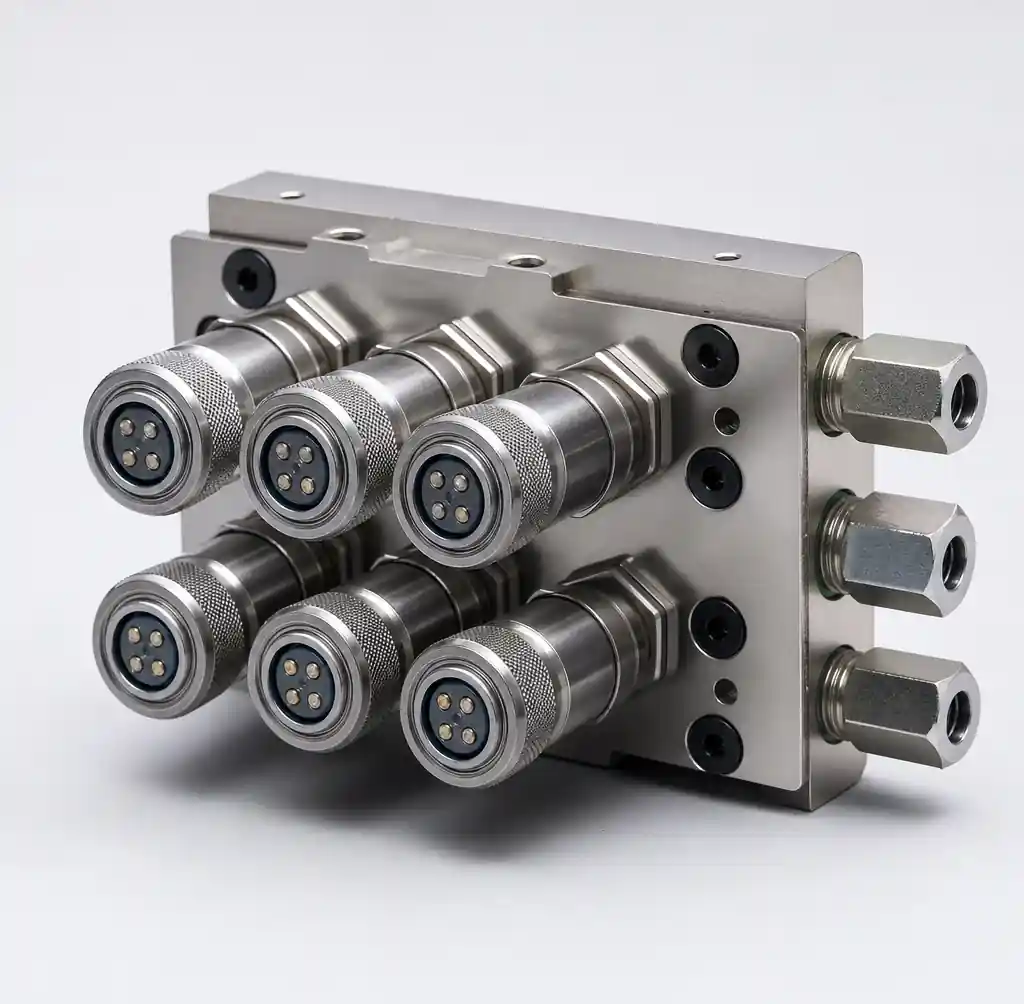
Los sistemas de acoplamiento múltiple integran múltiples conexiones hidráulicas, neumáticas y eléctricas en una sola placa de conexión. Estos sistemas permiten la conexión simultánea de 4 a 32 circuitos individuales con un solo movimiento de acoplamiento. Puedes especificar multiacoplamientos para aplicaciones como integración de máquinas-herramienta, conexiones de robots industriales y equipos móviles donde numerosos circuitos deben conectarse rápidamente.
La conexión sincronizada garantiza que todos los circuitos se encajen simultáneamente, evitando conexiones parciales que puedan causar fallos en el equipo. Los sistemas de acoplamiento múltiple reducen el tiempo de cambio entre un 85 y un 92% en comparación con las conexiones de acoplamiento individuales y eliminan errores en la secuencia de conexión. Para líneas de producción automatizadas que requieren reconfiguración frecuente, los acoplamientos múltiples son esenciales para lograr tiempos de cambio inferiores a 5 minutos.
! 9-plata-multiacoplamiento-conexión Sistema de acoplamiento múltiple con conexiones hidráulicas y neumáticas integradas
Acoplamientos compensados por temperatura y de separación
Los acoplamientos rápidos compensados por temperatura mantienen la integridad del sellado a través de variaciones extremas de temperatura desde -65°F hasta +400°F (-54°C a +204°C). Estos acoplamientos utilizan sellos con resorte y materiales adaptados a la expansión térmica para evitar fugas a medida que los componentes se calientan y enfrían. Debes especificar diseños compensados por temperatura para sistemas de aceite térmico, aplicaciones de agua caliente y cualquier proceso con ciclo de temperatura.
Los acoplamientos de separación incorporan mecanismos de fallo controlados que se separan bajo una fuerza de tracción excesiva para evitar la rotura de la manguera o daños en el equipo. Estos acoplamientos de seguridad son esenciales para aplicaciones de abastecimiento de combustible de vehículos, operaciones de transferencia de barco a tierra y cualquier escenario en el que pueda ocurrir un despegue accidental o un movimiento excesivo. El acoplamiento se separa limpiamente con una fuerza de tracción de 75-150 lbf (334-668 N), cerrando automáticamente ambas mitades para evitar derrames.
Preguntas frecuentes
¿Cuál es la diferencia entre acoplamientos rápidos y desconexiones rápidas?
Los acoplamientos rápidos y los desconectores rápidos son el mismo producto con terminología diferente. Ambos términos describen accesorios mecánicos que permiten la conexión y desconexión sin herramientas de las líneas de fluido. Los estándares del sector utilizan terminología de "acoplamiento rápido", mientras que algunos fabricantes prefieren la marca de "desconexión rápida".
¿Se pueden conectar acoplamientos rápidos bajo presión?
Los acoplamientos rápidos estándar deben conectarse a presión cero para evitar la pulverización de fluido y asegurar un buen enganche. Los acoplamientos de cara plana ISO 16028 están diseñados específicamente para la conexión y desconexión bajo presión residual de hasta 30 bar (435 psi). Verifica siempre la presión nominal del acoplamiento para la conexión bajo presión antes de intentar esta operación.
¿Cómo se evitan fugas de acoplamiento rápido?
Las fugas rápidas en el acoplamiento se deben a juntas tóricas desgastadas, superficies de sellado dañadas, contaminación por suciedad o una conexión incorrecta. Puedes prevenir fugas manteniendo la filtración del sistema en ISO 18/16/13 o superior para sistemas hidráulicos, inspeccionando los acoplamientos trimestralmente para detectar el desgaste del sello y asegurando el acoplamiento completo verificando los clics o indicadores visuales audibles. Sustituye los kits de sellados anualmente en aplicaciones de alto ciclo.
¿Qué tamaño de acoplamiento rápido necesito para mi aplicación?
Selecciona el tamaño de acoplamiento rápido según el caudal requerido y la caída de presión aceptable. Para sistemas hidráulicos, elige un tamaño de acoplamiento que genere una caída de presión inferior al 5% al máximo caudal. Para sistemas de aire, ajusta la capacidad de acoplamiento Cv a los requisitos de CFM de herramienta. En caso de duda, especifique una talla mayor que el diámetro de la manguera o tubería para minimizar las restricciones.
¿Merecen la pena los acoplamientos rápidos de acero inoxidable por el coste extra?
Los acoplamientos rápidos de acero inoxidable cuestan entre 2 y 4 veces más que los equivalentes de latón, pero ofrecen una resistencia superior a la corrosión, una vida útil más larga y son necesarios para aplicaciones de grado alimentario y farmacéuticas. Debes especificar acero inoxidable para cualquier aplicación que implique productos químicos corrosivos, agua de mar, agentes desinfectantes o donde la contaminación de materiales no pueda ser tolerada. Para aplicaciones estándar de aceite de aire y hidráulico, los acoplamientos de latón ofrecen un rendimiento adecuado a menor coste.
¿Con qué frecuencia deben reemplazarse los acoplamientos rápidos?
Sustituye los acoplamientos rápidos cuando muestren desgaste visible del sello, requieran una fuerza de conexión excesiva o desarrollen fugas. Las aplicaciones de alta frecuencia (50+ ciclos al día) suelen requerir reemplazo cada 12-18 meses. Los acoplamientos de uso moderado pueden durar entre 3 y 5 años. Los acoplamientos de equipos móviles expuestos a la suciedad deben reemplazarse cada 2-3 años, independientemente de su apariencia. Siempre cambia los acoplamientos después de 100.000 ciclos de conexión o según las recomendaciones del fabricante.
Conclusión
Los sistemas de acoplamiento rápido ofrecen un valor medible mediante la reducción del tiempo de conexión, la eliminación de vertidos de fluidos, la mayor seguridad y una mayor flexibilidad operativa. La selección adecuada del acoplamiento requiere adaptar el mecanismo de conexión, el diseño del apagón, el material y la clasificación de presión a los requisitos específicos de tu aplicación. Los ingenieros especifican acoplamientos estándar ISO para la intercambiabilidad, diseños sanitarios para el procesamiento de alimentos y tipos de cara plana para equipos móviles donde el control de contaminación es crítico.
El mercado de acoplamiento ofrece soluciones para aplicaciones que van desde sistemas de aire de 50 psi hasta equipos de prueba de 10.000 psi, con materiales que abarcan desde latón hasta aleaciones exóticas. Cuando analizas el coste total de propiedad, incluyendo mano de obra, tiempo de inactividad y pérdida de fluidos, los acoplamientos rápidos resultan económicos para cualquier aplicación que requiera más de conexiones mensuales. Comienza identificando tus requisitos de presión, caudal y compatibilidad química, y luego selecciona una tecnología de acoplamiento que optimice la velocidad de conexión manteniendo la fiabilidad del sistema.
Si necesitas sistemas de acoplamiento rápido de alto rendimiento para aplicaciones de transferencia de fluidos industriales, YuechenPrecision Technology ofrece soluciones completas de manipulación de boquillas y fluidos diseñadas para entornos industriales exigentes. Nuestro equipo de ingeniería de aplicaciones ofrece soporte técnico para el diseño de sistemas, la selección de materiales y la optimización del rendimiento en múltiples industrias.
Contáctanos hoy para recomendaciones personalizadas de acoplamiento rápido, especificaciones técnicas y soporte de ingeniería de aplicaciones para tus sistemas de manipulación de fluidos.