



Toberas de torre de refrigeración: Maximización de la eficiencia en la transferencia de calor
Las instalaciones industriales pueden perder entre un 15 y un 20% de su capacidad de refrigeración debido a una distribución inadecuada del agua, lo que afecta directamente a los costes energéticos y a la eficiencia operativa. Las boquillas de la torre de refrigeración son los componentes críticos que determinan la eficacia de tu sistema en transferir el calor y gestionar el consumo de agua.
Si operas centrales eléctricas, instalaciones de procesamiento químico, sistemas HVAC o cualquier operación de refrigeración industrial, entender la selección y optimización de toberas es esencial para mantener un rendimiento máximo y reducir los costes operativos.
- 1. ¿Qué son las boquillas de la torre de refrigeración?
- 2. Tipos de toberas de torre de refrigeración y características de rendimiento
- 2.1. Boquillas de cono completo
- 2.2. Boquillas huecas de cono para pulverización
- 2.3. Boquillas de pulverización de ventilador plano
- 2.4. Boquillas cuadradas de pulverización
- 2.5. Boquillas de objetivo espiral
- 3. Selección de materiales de la tobera de la torre de refrigeración
- 4. Cómo la selección de la boquilla afecta a la eficiencia de transferencia de calor
- 4.1. Optimización del tamaño de las gotas
- 4.2. Cobertura del patrón de pulverización
- 4.3. Balance de presión y caudal
- 5. Problemas comunes de boquillas que reducen el rendimiento de refrigeración
- 5.1. Boquilla obstruida y acumulación de incrustaciones
- 5.2. Daños físicos y desgaste
- 5.3. Problemas de instalación y espaciado
- 6. Mejores prácticas de mantenimiento de toberas para máxima eficiencia
- 6.1. Control de la química del agua
- 6.2. Calendarios de inspección y limpieza
- 6.3. Programas de reemplazo preventivo
- 7. Optimización de la disposición de la boquilla para la máxima transferencia de calor
- 7.1. Cálculos de espaciado y cobertura
- 7.2. Balance de distribución de presión
- 7.3. Compatibilidad con tipos de relleno
- 8. Seleccionando las toberas adecuadas para la torre de refrigeración de tu sistema
- 8.1. Consideraciones sobre la presión del sistema
- 8.2. Requisitos de configuración de relleno
- 8.3. Calidad y tratamiento del agua
- 9. Preguntas frecuentes
- 9.1. ¿Qué tamaño de boquillas de torre de refrigeración necesito para mi sistema?
- 9.2. ¿Con qué frecuencia deben limpiarse o reemplazarse las boquillas de la torre de refrigeración?
- 9.3. ¿Qué causa la distribución desigual del agua en las torres de refrigeración?
- 9.4. ¿Puedo mezclar diferentes tipos de boquillas en la misma torre de refrigeración?
- 9.5. ¿Cómo evito que la boquilla se obstruya en condiciones de agua dura?
- 10. Conclusión
¿Qué son las boquillas de la torre de refrigeración?
Las boquillas de torre de refrigeración son dispositivos de pulverización diseñados con precisión que distribuyen agua caliente circulante sobre el medio de relleno en forma de gotas finas o patrones controlados de pulverización. Estos componentes crean la interfaz crítica agua-aire donde ocurre el enfriamiento por evaporación, representando hasta el 85% del rechazo total de calor en los sistemas modernos de refrigeración.
La función principal de la tobera es descomponer el chorro de agua en tamaños óptimos de gotas —típicamente de 2 a 5 mm de diámetro— que equilibren la rápida evaporación con una pérdida mínima por deriva. Las presiones de funcionamiento de las toberas de torre de refrigeración de contraflujo suelen oscilar entre 0,5 y 2,5 bar, mientras que los caudales varían entre 10 y 60 litros por minuto dependiendo del tipo de tobera y los requisitos del sistema.
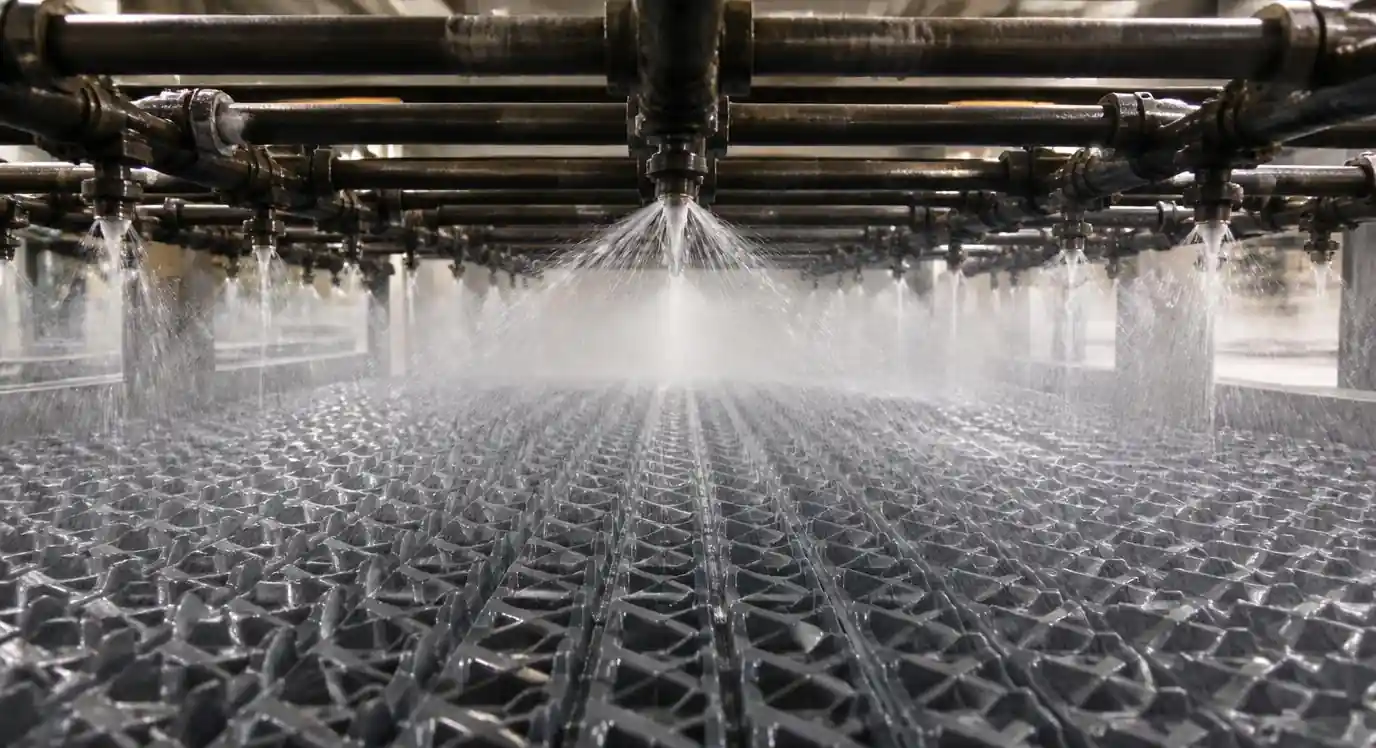
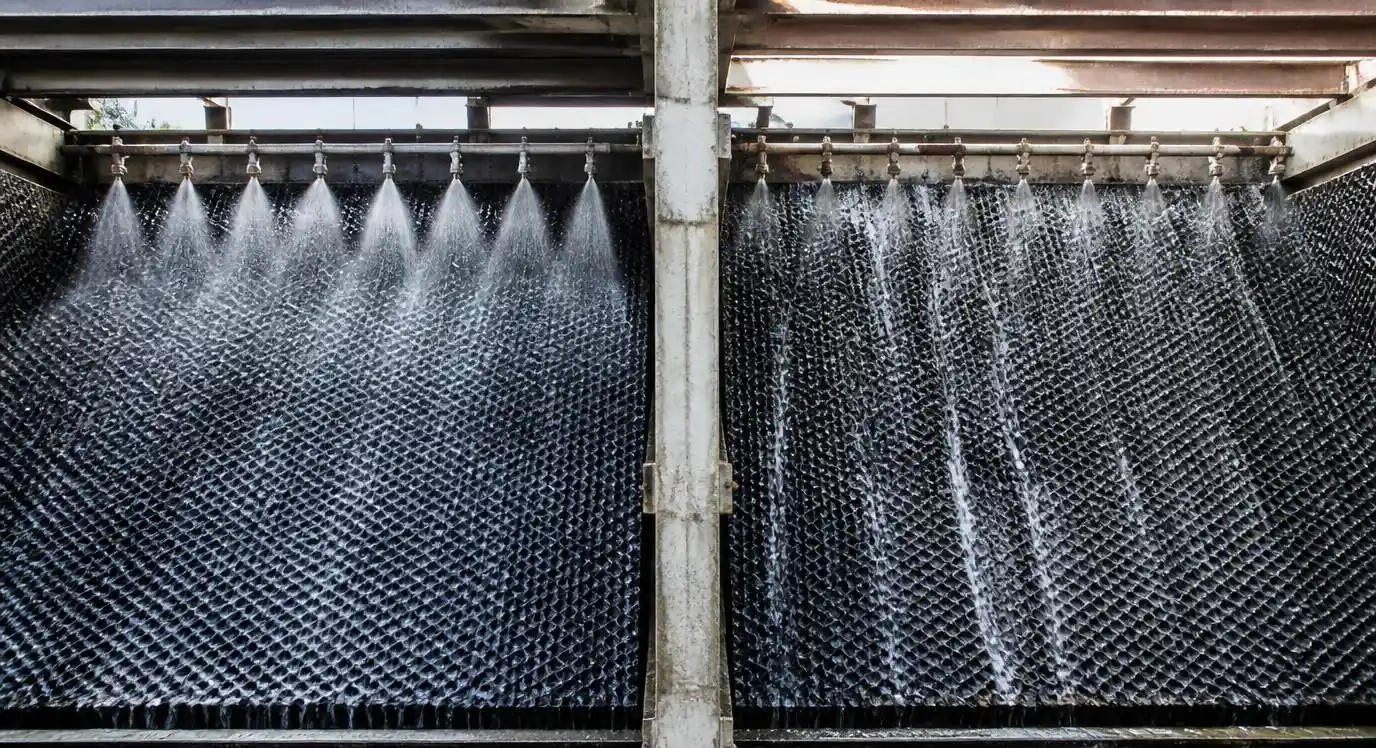
! 1-torre de refrigeración-tobera-distribución-de pulverización Toberas de torre de refrigeración que distribuyen agua sobre el medio de relleno
La correcta selección de la boquilla influye directamente en la tasa de transferencia de calor, la eficiencia energética, el consumo de agua y la estabilidad general del sistema. Cuando las boquillas distribuyen el agua de forma uniforme entre las superficies de relleno, se consigue la máxima área de contacto entre el agua y el aire, acelerando la eliminación del calor y reduciendo el desperdicio de energía.
Tipos de toberas de torre de refrigeración y características de rendimiento
Diferentes diseños de toberas crean patrones de pulverización distintos optimizados para configuraciones específicas de torres de refrigeración y requisitos operativos. Comprender estas variaciones te ayuda a ajustar el rendimiento de la boquilla a las necesidades de tu sistema.
Boquillas de cono completo
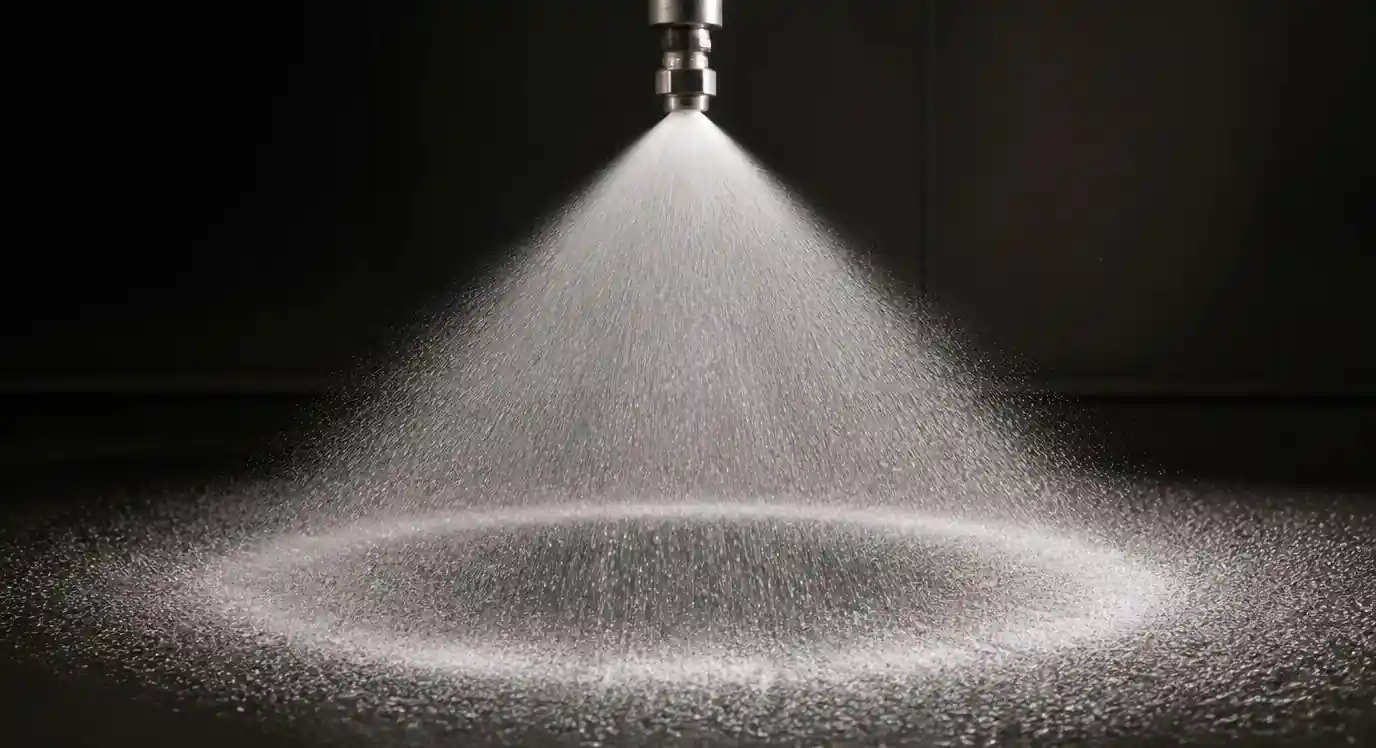
Las boquillas de cono completo producen patrones de pulverización circulares uniformes con cobertura líquida completa en todo el cono. El agua se distribuye uniformemente por toda la zona de pulverización, lo que hace que estas toberas sean ideales para aplicaciones en torres de refrigeración de contraflujo donde se requiere una cobertura vertical constante.
Estas boquillas generan gotas de tamaño medio de 2-5 mm y funcionan eficazmente a caudales entre 10 y 50 litros por minuto. Puedes usar boquillas de cono completo en instalaciones de generación eléctrica, grandes sistemas HVAC y refrigeración de procesos industriales donde una distribución fiable y uniforme es esencial.
! patrón de 2 conos completos de pulverización Boquilla de pulverización de cono completo creando un patrón de pulverización circular
Boquillas huecas de cono para pulverización
Las boquillas huecas en forma de cono crean patrones de pulverización en forma de anillo con un flujo concentrado de agua en la periferia y un líquido mínimo en el centro. Este diseño produce gotas finas de menos de 2 mm, mejorando las tasas de evaporación para aplicaciones que requieren transferencia rápida de calor.
Funcionando a 10-60 litros por minuto, las boquillas huecas de cono funcionan bien en plantas petroquímicas e instalaciones de procesamiento químico donde la atomización fina y el contacto de alta superficie mejoran la eficiencia de refrigeración. El patrón de anillos también reduce la caída de presión en comparación con diseños de cono completo a caudales equivalentes.
Boquillas de pulverización de ventilador plano
Las boquillas de ventilador planas generan patrones de pulverización estrechos y elípticos que proporcionan una cobertura concentrada a lo largo de un trayecto lineal. Estas toberas producen gotas que van de 1 a 3 mm y funcionan a caudales más bajos, de 5 a 40 litros por minuto, lo que las hace adecuadas para unidades de refrigeración compactas e instalaciones con espacio limitado.
La cobertura de banda estrecha permite una orientación precisa de las áreas de relleno y funciona eficazmente en sistemas modulares de refrigeración donde zonas específicas requieren una distribución controlada del agua. Las boquillas de ventilador planas también minimizan el exceso de pulverización y el desperdicio de agua en aplicaciones con requisitos de cobertura definidos.
Boquillas cuadradas de pulverización
Las boquillas de pulverización cuadradas producen patrones rectangulares superpuestos que coinciden con la disposición geométrica de la mayoría de las secciones de relleno de torres de refrigeración. Este diseño mejora la cobertura de llenado hasta en un 25% en comparación con las boquillas circulares tradicionales, eliminando zonas secas y evitando cargas térmicas desiguales.
! 3-cuadrada-rober-tobera-cobertura Boquillas de pulverización cuadradas que proporcionan un patrón de cobertura rectangular
Funcionando a 15-55 litros por minuto con tamaños de gotas de 3-4 mm, las boquillas cuadradas proporcionan una eficiencia de cobertura superior tanto para torres de flujo cruzado como para torres de contraflujo. El patrón de cuadrícula superpuesto garantiza una saturación completa de relleno manteniendo una distribución consistente de la presión a lo largo del campo de pulverización.
Boquillas de objetivo espiral
Las boquillas espirales de blanco utilizan un elemento difusor para crear patrones de pulverización en forma de flor con características de flujo rotacional. Este diseño mejora la distribución lateral del agua en torres de refrigeración de flujo cruzado, donde el agua debe dispersarse horizontalmente a través de superficies de relleno antes de descender.
La acción en espiral mejora la uniformidad de la cobertura y reduce la formación de zonas secas que disminuyen la eficiencia de transferencia de calor. Estas toberas funcionan especialmente bien en la modernización de torres de refrigeración antiguas, donde una mejor distribución puede restaurar el rendimiento sin reemplazar sistemas completos de distribución de agua.
Selección de materiales de la tobera de la torre de refrigeración
La elección de materiales afecta directamente a la longevidad de la tobera, la frecuencia de mantenimiento y la resistencia a condiciones de funcionamiento duras que se encuentran en aplicaciones de refrigeración industrial.
| Material | Temperatura máxima | Resistencia química | Esperanza de vida típica | Mejores aplicaciones |
|---|---|---|---|---|
| Polipropileno (PP) | 85°C | Bien | 3-5 años | Sistemas estándar de refrigeración industrial y HVAC |
| PVC/ABS | 65-75°C | Moderado | 2-4 años | Refrigeración industrial ligera y comercial |
| Nylon | 100°C | Excelente | 5-8 años | Plantas químicas, aplicaciones de alta temperatura |
| Acero inoxidable 316 | 250°C | Excelente | 8-10+ años | Ambientes corrosivos, procesamiento de alimentos |
| Latón | 150°C | Bien | 4-6 años | Sistemas industriales generales y municipales de agua |
Las toberas de polipropileno ofrecen la mejor relación coste-rendimiento para sistemas industriales estándar de refrigeración que operan a temperaturas moderadas con agua tratada. El material resiste la mayoría de los productos químicos comunes del agua de refrigeración y proporciona una vida útil adecuada para los ciclos de mantenimiento típicos.
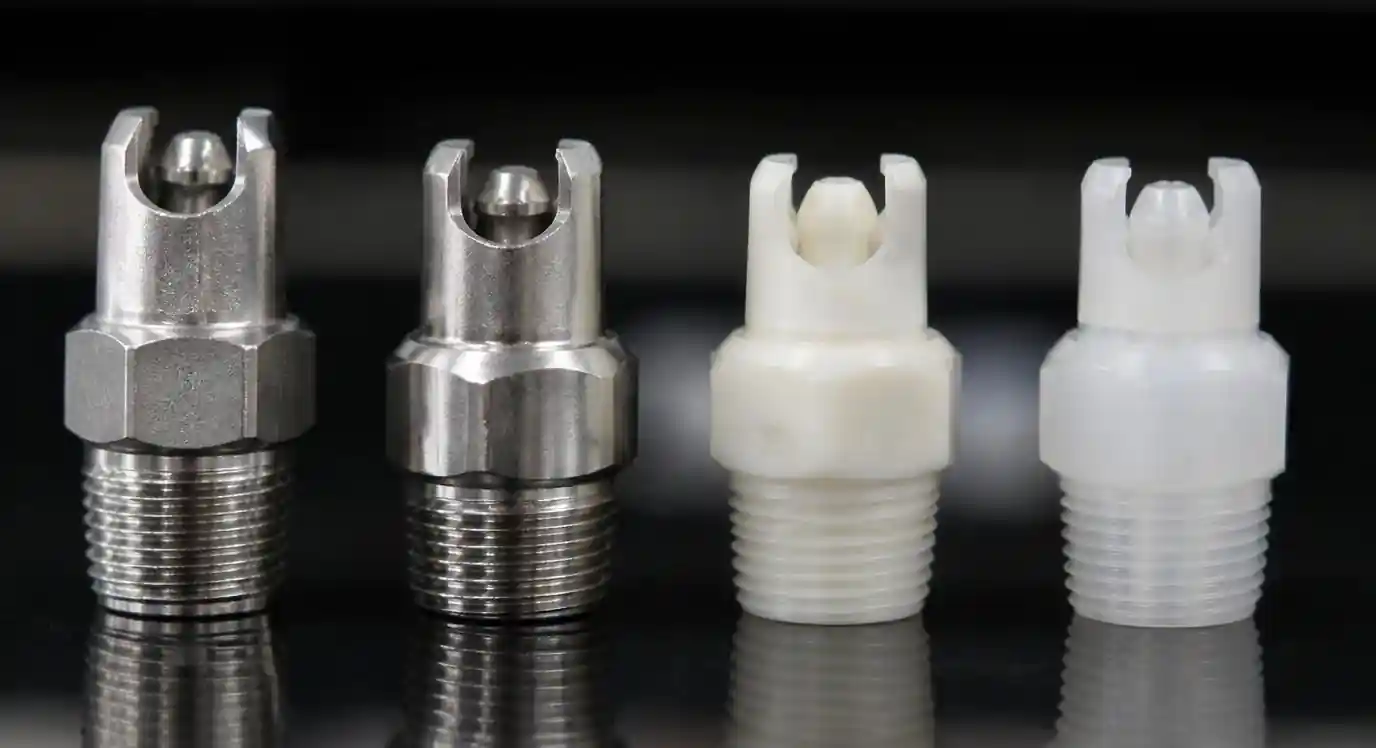
! 4-boquillas de torre de refrigeración de acero inoxidable Boquillas de torre de refrigeración de acero inoxidable y plástico
Para sistemas expuestos a productos químicos agresivos, alto potencial de incrustación o temperaturas elevadas superiores a 85°C, las boquillas 316 de nylon o acero inoxidable ofrecen una durabilidad superior. Las toberas de acero inoxidable permanecen operativas durante más de una década en instalaciones de alta duración, reduciendo los costes de reemplazo a largo plazo a pesar de la mayor inversión inicial.
Las toberas de latón funcionan bien en sistemas municipales y comerciales donde la química del agua está controlada y el riesgo de corrosión es moderado. Sin embargo, el latón se degrada más rápidamente que el acero inoxidable en condiciones ácidas o en agua con alto contenido de cloruro.
Cómo la selección de la boquilla afecta a la eficiencia de transferencia de calor
La relación entre el rendimiento de la tobera y la eficiencia de refrigeración es cuantificable y significativa. Cuando el caudal de la tobera aumenta de 1 g/s a 15 g/s, la transferencia de calor puede aumentar de 1.607 kW a 1.743 kW, una mejora del 8,4 % en el rendimiento térmico.
Optimización del tamaño de las gotas
Las gotas más pequeñas crean una mayor superficie total para la evaporación, acelerando las tasas de transferencia de calor. Sin embargo, las gotas por debajo de 1 mm de diámetro aumentan la pérdida de deriva y reducen el porcentaje de agua que llega al medio de relleno. El rango óptimo de tamaño de gotas de 2-5 mm maximiza el enfriamiento por evaporación mientras minimiza el desperdicio de agua.
Los sistemas de alta presión de alrededor de 1000 PSI funcionan mejor con orificios más pequeños que producen una atomización fina, mientras que los sistemas de baja presión requieren aberturas mayores para mantener caudales adecuados. Debes adaptar el tamaño del orificio a la presión disponible de tu sistema para lograr características de gotas objetivo.
Cobertura del patrón de pulverización
La distribución desigual del agua crea zonas secas dentro del relleno por donde el aire pasa sin contactar con el agua, eliminando la contribución de refrigeración de esa sección. Las brechas de cobertura pueden reducir el rendimiento general de refrigeración entre un 15 y un 20%, obligando a ventiladores y bombas a trabajar más para compensar.
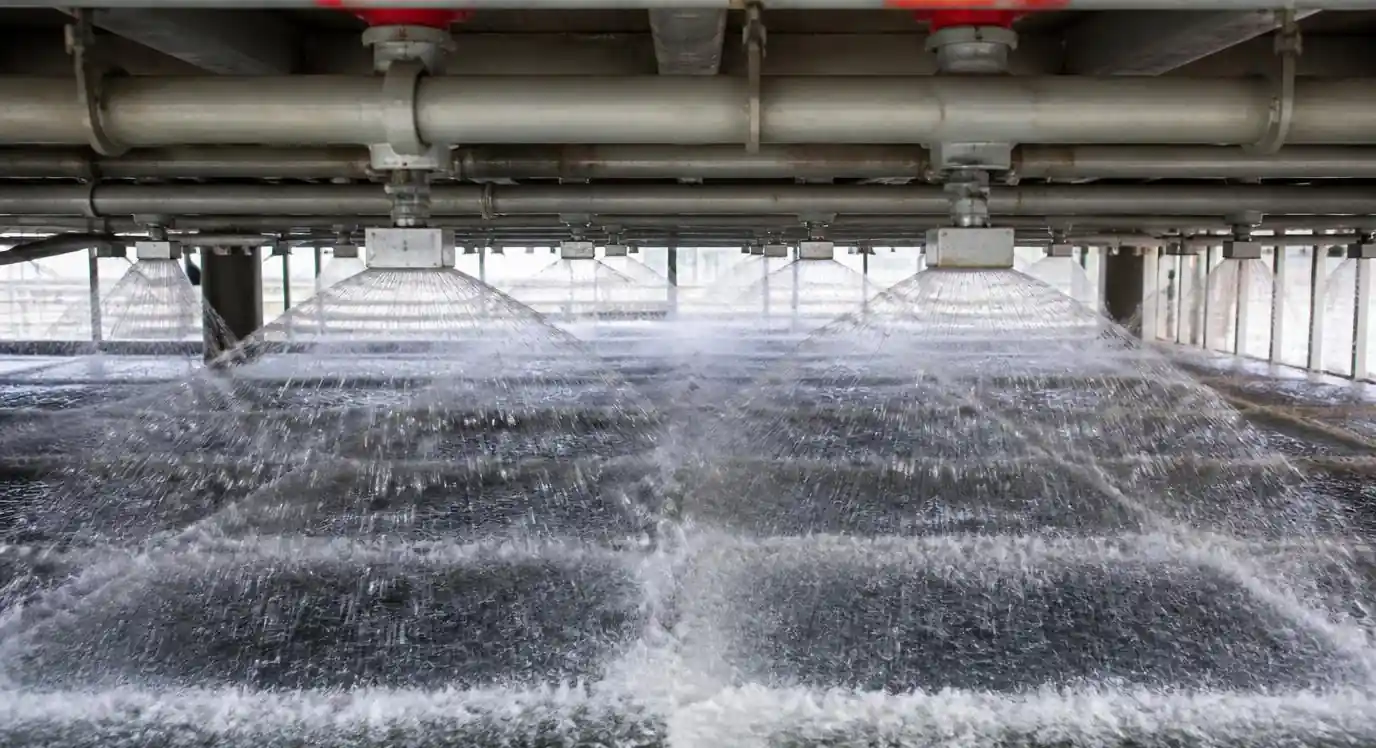
! 5-torres-enfriamiento-llenando-media-coverage Cobertura de agua a través del medio de relleno de la torre de refrigeración
Boquillas de pulverización cuadradas y boquillas circulares bien espaciadas con patrones de cobertura superpuestos eliminan estas zonas secas. Los estudios de simulación muestran que los parámetros óptimos incluyen caudales de pulverización de 4,5 kg/s, diámetros de gotas de 15-45 μm para aplicaciones con niebla fina, y disposiciones de toberas utilizando patrones de doble círculo o rejilla para máxima cobertura.
Balance de presión y caudal
Operar las toberas a presiones por debajo de su rango de diseño produce gotas más grandes y lentas con tasas de evaporación reducidas. Exceder la presión de diseño aumenta el consumo energético sin mejoras proporcionales en la refrigeración y acelera el desgaste de la tobera.
La influencia de la presión de la boquilla en la transferencia de calor es significativa, pero sigue rendimientos decrecientes. Duplicar la presión suele aumentar la transferencia de calor en menos del 10%, mientras que el consumo de energía aumenta de forma lineal. Debes operar las toberas dentro de rangos de presión especificados por el fabricante para maximizar la eficiencia.
Problemas comunes de boquillas que reducen el rendimiento de refrigeración
Incluso una degradación menor de la tobera afecta de forma medible a la eficiencia del sistema. Una tobera de distribución de agua parcialmente obstruida puede reducir el rendimiento térmico entre un 10 y un 30%, mientras que una escala tan fina como 1/32 de pulgada en un medio de relleno aumenta el consumo energético entre un 10 y un 15%.
Boquilla obstruida y acumulación de incrustaciones
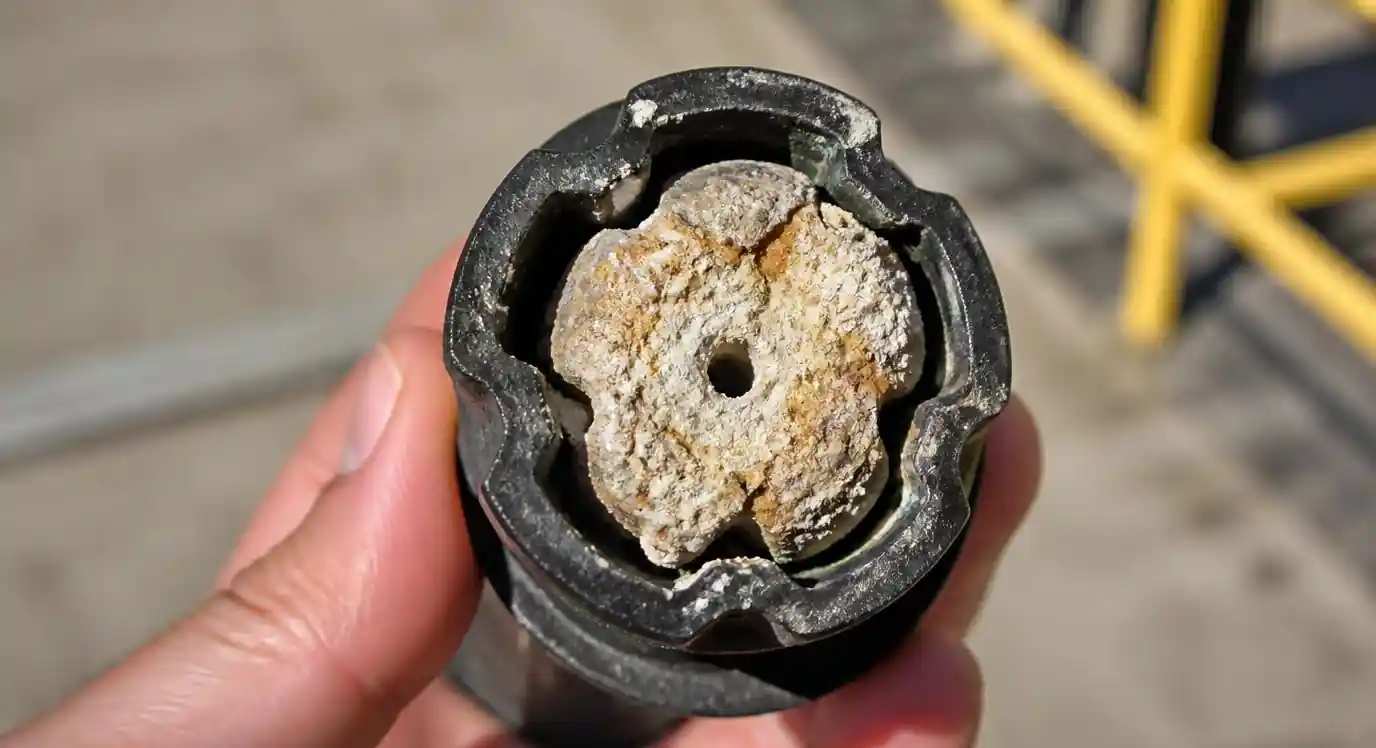
Los depósitos minerales de escamas de agua dura que contiene carbonato de calcio se acumulan en los orificios de las toberas, reduciendo el diámetro efectivo y alterando los patrones de pulverización. Esto genera una distribución desigual, con algunas zonas recibiendo exceso de agua mientras que otras permanecen secas.
La materia orgánica, incluyendo algas y biofilm, también contribuye a la obstrucción, especialmente en sistemas con tratamiento de agua inadecuado. Los residuos en suspensión aérea entran en sistemas de refrigeración abiertos y se alojan en los conductos de la tobera, restringiendo aún más el flujo.
! 6-depósitos-taponamiento-de-escamas-boquilla Boquilla de torre de refrigeración con acumulación de incrustación mineral
Para la eliminación de escamas minerales, remojar las boquillas en soluciones ácidas suaves disuelve eficazmente los depósitos de calcio. El vinagre funciona para una ligera acumulación, mientras que los agentes descalcificantes comerciales gestionan una acumulación más intensa. La acumulación orgánica requiere protocolos de desinfección que aborden biofilm y algas sin dañar los materiales de la boquilla.
Daños físicos y desgaste
Las boquillas se agrietan, astillan o desgastan por el flujo constante de agua, el ciclo de presión y la exposición a productos químicos. Las boquillas dañadas gotean en las conexiones, rociaron en direcciones no intencionadas o se rompen en fragmentos que contaminan el medio de relleno y las cuencas.
La inspección visual regular detecta la mayoría de los daños físicos antes de que afecten gravemente al rendimiento. Debes comprobar si hay grietas alrededor de las roscas y bordes de los orificios, comprobar que los ojales permanecen intactos y sellados, y confirmar que las boquillas estén bien montadas con la orientación adecuada.
Problemas de instalación y espaciado
Un espaciado incorrecto entre las boquillas deja huecos en la cobertura que reducen la utilización efectiva del relleno. Boquillas instaladas en ángulos incorrectos rociaron fuera del área de relleno prevista, desperdiciando agua y creando zonas húmedas en las paredes de la torre de refrigeración que favorecen la corrosión y el crecimiento biológico.
Las conexiones flojas permiten que el agua escape antes de llegar a la tobera, reduciendo la presión y el caudal por debajo de los parámetros de diseño. Esto produce gotas más grandes con malas características de atomización que disminuyen la eficiencia evaporativa.
Mejores prácticas de mantenimiento de toberas para máxima eficiencia
La prevención es más eficaz y rentable que el mantenimiento reactivo. La implementación de programas integrales de tratamiento del agua utilizando inhibidores químicos del umbral modifica la solubilidad del carbonato de calcio, evitando la formación de escamas a nivel molecular.
Control de la química del agua
El control de los ciclos de concentración gestiona los niveles de minerales disueltos antes de que precipiten como depósitos de escamas. El monitoreo regular del pH, la conductividad y los índices de escalamiento permite ajustar las tasas de blowdown y la dosificación química para mantener condiciones estables.
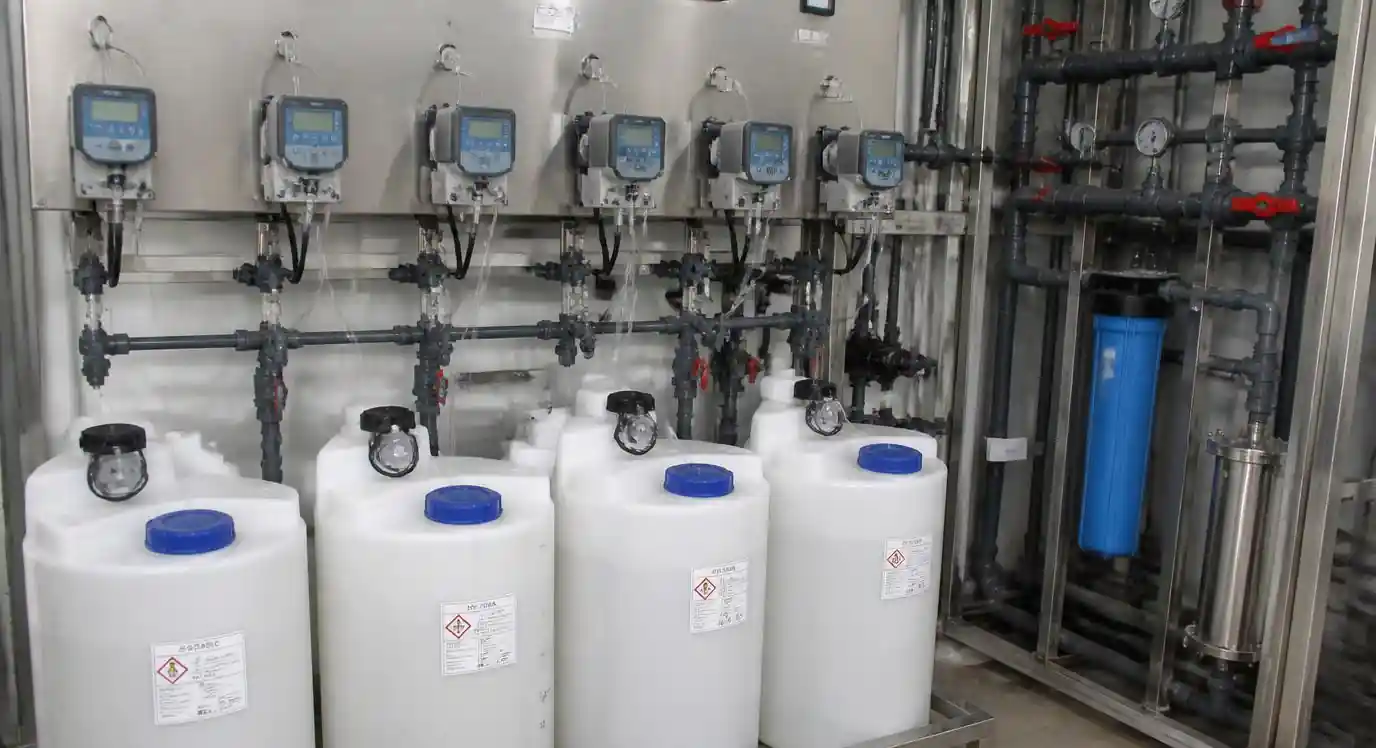
Los sistemas automatizados de tratamiento de agua proporcionan tasas consistentes de alimentación química y responden a cambios en tiempo real en la calidad del agua, eliminando la deriva de rendimiento que se produce con los ajustes manuales del tratamiento. Esta automatización reduce los costes laborales y mejora la eficacia del tratamiento.
! 7-torre-enfriamiento-sistema-de-tratamiento de agua Sistema de tratamiento de agua en torre de refrigeración y alimentación química
Calendarios de inspección y limpieza
Las inspecciones trimestrales de las toberas detectan problemas en desarrollo antes de que afecten a la capacidad de refrigeración. Eliminar muestras aleatorias de diferentes zonas para evaluar las tasas de escalado, los patrones de desgaste y las tendencias a obstruir en todo el sistema de distribución.
La limpieza anual y exhaustiva debe incluir la eliminación de incrustos, lodos y biofilm de boquillas, relleno, cuencas y superficies de intercambio térmico. Seguir los procedimientos de bloqueo/etiquetado y entrada en espacios confinados que cumplen con OSHA para garantizar la seguridad de los trabajadores durante las inspecciones internas y las operaciones de limpieza.
Programas de reemplazo preventivo
Establecer calendarios de reemplazo basados en el material de la tobera y las condiciones de funcionamiento previene fallos inesperados durante la demanda de refrigeración pico. Controlar las fechas de instalación de las toberas y las vidas útiles esperadas para presupuestar reemplazos de forma proactiva en lugar de reaccionar a la degradación del rendimiento.
Mantener un inventario de boquillas de repuesto permite reemplazar inmediatamente cuando las inspecciones revelan unidades dañadas o gravemente obstruidas. Esto minimiza el tiempo de inactividad y evita situaciones en las que boquillas averiadas creen zonas secas que obligan a desconectar secciones enteras de la torre de refrigeración.
Optimización de la disposición de la boquilla para la máxima transferencia de calor
La posición y el espaciado de las boquillas determinan si tu torre de refrigeración alcanza su capacidad de diseño. El objetivo es que las zonas de cobertura se solapen y eliminen huecos, en lugar de patrones de pulverización discretos que dejen áreas de relleno secas.
Cálculos de espaciado y cobertura
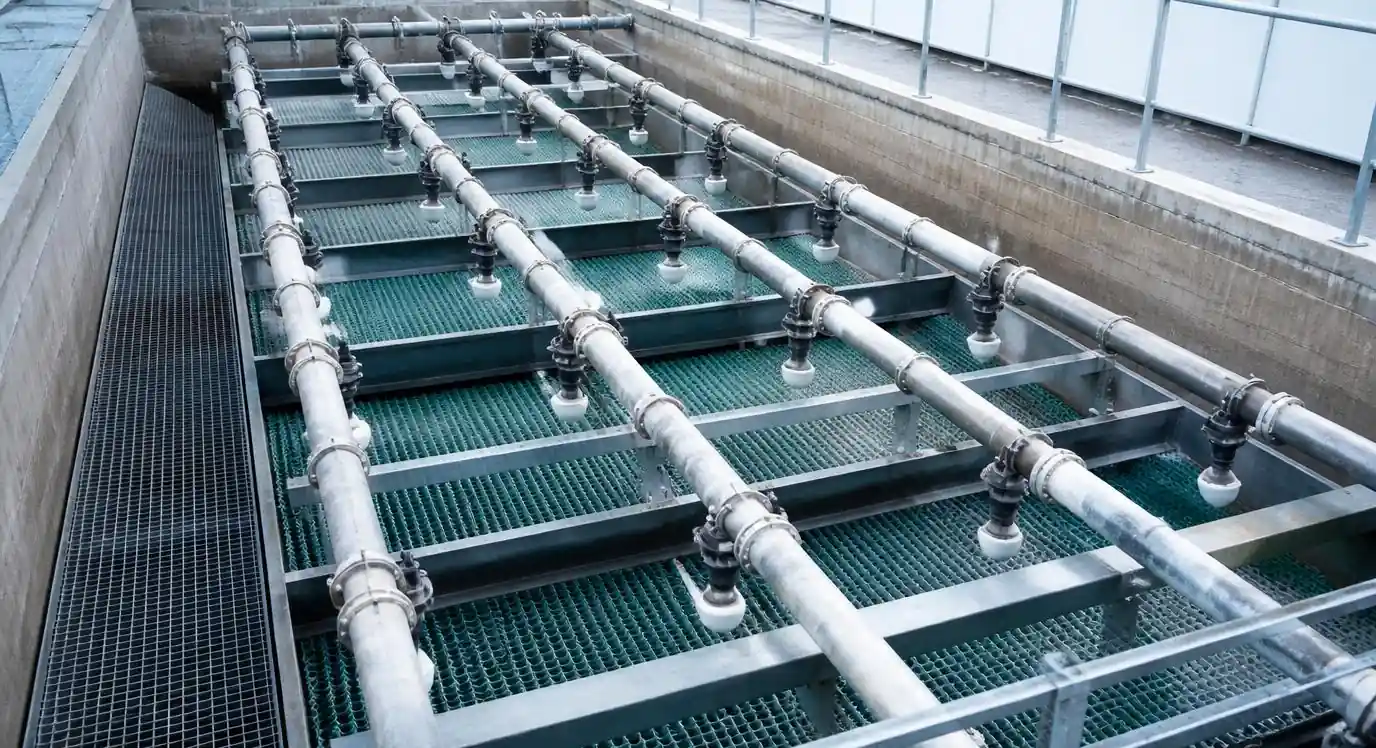
Calcula el espacio necesario entre las boquillas en función del diámetro del patrón de pulverización a la distancia de la superficie de relleno. Boquillas de cono completo con ángulos de pulverización de 60 grados a una altura de montaje de 1,5 metros crean círculos de cobertura de aproximadamente 1,5 metros de diámetro. Las toberas de espaciamiento en centros de 1,2 metros proporcionan un solapamiento del 20% que elimina huecos.
Las boquillas de pulverización cuadradas simplifican la planificación del diseño porque sus patrones rectangulares coinciden con la geometría de los paneles de relleno. Coloca estas toberas para crear una cobertura completa de la cuadrícula con un solapamiento del 10-15% entre zonas de pulverización adyacentes.
! 8-torre-enfriamiento-tobera-diseño-patrón Espaciado de la tobera de la torre de refrigeración y diseño de la disposición
Balance de distribución de presión
La presión desigual a través del campo de la tobera provoca variaciones en el flujo que crean zonas calientes y frías dentro de la torre de refrigeración. Las primeras boquillas en tuberías de distribución largas reciben una presión mayor que las de los extremos de las tuberías, produciendo características de pulverización inconsistentes.
Una tubería de distribución de tamaño adecuado con diámetro adecuado mantiene la uniformidad de presión en todas las toberas. Los diseños de colectores con tees reductores o diámetros cónicos compensan la caída de presión a lo largo del tramo de distribución, asegurando que cada tobera funcione en condiciones de diseño.
Compatibilidad con tipos de relleno
El relleno de película requiere patrones finos de pulverización con cobertura completa para humedecer todas las superficies verticales de forma uniforme. Cualquier zona seca en las láminas de relleno elimina la contribución de enfriamiento de esas secciones. Utiliza boquillas de pulverización de cono completo o cuadradas espaciadas para proporcionar una cobertura del 100% en toda la zona del plan de llenado.
El relleno de salpicaduras tolera gotas más grandes y una distribución menos precisa porque el agua cae sobre múltiples barras de salpicaduras que redistribuyen el flujo. Sin embargo, mantener una distribución uniforme en todas las secciones de relleno de salpicaduras mejora la eficiencia en comparación con el flujo concentrado en áreas limitadas.
Seleccionando las toberas adecuadas para la torre de refrigeración de tu sistema
Ajusta las especificaciones de la tobera al tipo de torre de refrigeración, las condiciones de funcionamiento y los requisitos de rendimiento. El proceso de selección debe evaluar múltiples factores de forma sistemática en lugar de basarse en un solo criterio como el coste más bajo.
| Factor | Cono lleno | Cono Hueco | Spray cuadrado | Ventilador plano |
|---|---|---|---|---|
| Patrón de cobertura | Circular | En forma de anillo | Cuadrícula rectangular | Banda lineal |
| Tamaño de la gota | 2-5 mm | <2 mm | 3-4 mm | 1-3 mm |
| Rango de caudal | 10-50 L/min | 10-60 L/min | 15-55 L/min | 5-40 L/min |
| Rango de presión | 0,5-2,5 compás | 1.0-3.0 bar | 0,8-2,0 bar | 0,3-1,5 bar |
| Lo mejor para | Torres de contraflujo | Necesidades de atomización fina | Rellenos rectangulares | Unidades compactas |
Consideraciones sobre la presión del sistema
Los sistemas de alta presión de alrededor de 1000 PSI funcionan mejor con orificios más pequeños, mientras que los de baja presión necesitan aberturas más grandes para mantener un flujo adecuado. Operar por debajo de la presión mínima de diseño produce gotas grandes y lentas que reducen la eficiencia de evaporación. Superar la presión máxima desperdicia energía y acelera el desgaste.
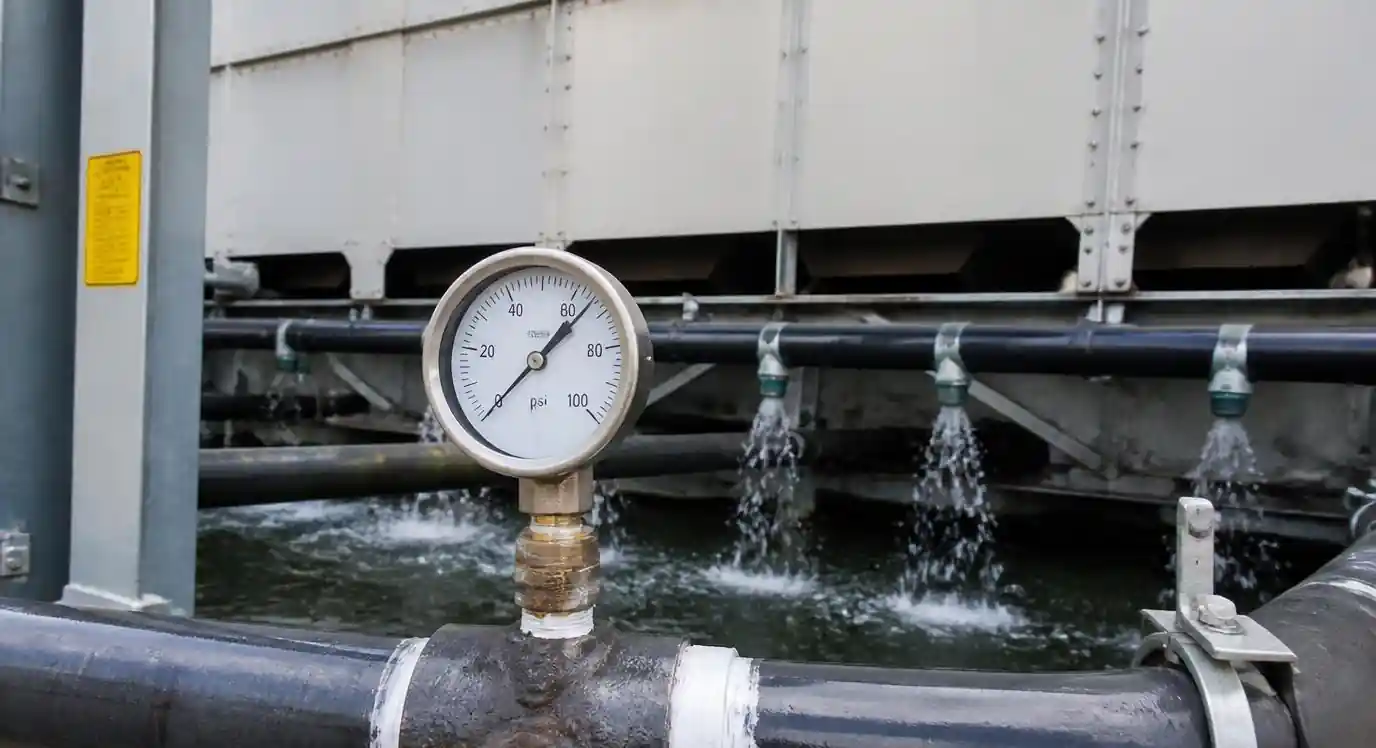
Verifica que las bombas de tu torre de refrigeración puedan suministrar la presión requerida en la entrada de la boquilla tras tener en cuenta las pérdidas por fricción de la tubería, los cambios de elevación y las caídas de presión del filtro. La instalación de manómetros en los colectores de distribución confirma que las condiciones de funcionamiento reales coinciden con las suposiciones de diseño.
! 9-torre-enfriamiento-manómetro-manómetro Sistema de tobera de torre de refrigeración para monitorización de manómetro
Requisitos de configuración de relleno
Las torres de contraflujo con relleno vertical requieren boquillas que distribuyen el agua de manera uniforme a lo largo de la superficie superior de relleno, lo que hace que los diseños de pulverización en cono completo y cuadrado sean ideales. Las torres de flujo cruzado necesitan boquillas que rocien lateralmente a lo largo de las caras de relleno, favoreciendo boquillas de blanco en espiral y toberas de cono completo orientadas horizontalmente.
El relleno de salpicadura tolera una distribución menos precisa que el relleno de película, permitiendo un mayor espaciamiento entre las boquillas y gotas más grandes. El relleno de película requiere una cobertura completa y uniforme para lograr la máxima eficiencia, lo que exige una selección cuidadosa de la tobera y cálculos precisos de espaciado.
Calidad y tratamiento del agua
Sistemas con química agresiva del agua, alta dureza o mal tratamiento requieren materiales duraderos como acero inoxidable 316 o nylon. El agua bien tratada con pH y potencial de escallado controlados permite boquillas de polipropileno rentables que ofrecen una vida útil adecuada.
Las plantas químicas que manejan fluidos corrosivos deben especificar toberas de acero inoxidable o polímero especializadas clasificadas para esos productos químicos específicos. Las instalaciones de procesamiento de alimentos requieren boquillas hechas con materiales aprobados por la FDA que no contaminen el agua que entra en contacto con productos alimentarios.
Preguntas frecuentes
¿Qué tamaño de boquillas de torre de refrigeración necesito para mi sistema?
El tamaño de la tobera depende del caudal requerido por tobera y de la presión disponible del sistema. Calcula el flujo total de agua de refrigeración, divídelo por el número de boquillas y luego selecciona el tamaño del orificio de la boquilla que suministre ese flujo a tu presión de operación. La mayoría de las torres de refrigeración de contraflujo utilizan toberas que fluyen entre 15 y 40 litros por minuto a una presión de 1-2 bar.
¿Con qué frecuencia deben limpiarse o reemplazarse las boquillas de la torre de refrigeración?
Inspecciona las boquillas trimestralmente y límpialas anualmente como parte del mantenimiento integral de la torre de refrigeración. Cambia las boquillas de plástico cada 3-5 años dependiendo del material y las condiciones de funcionamiento, mientras que las de acero inoxidable pueden durar entre 8 y 10+ años. Cámbiala inmediatamente si observas grietas, desgaste severo o deterioro del rendimiento que la limpieza no soluciona.
¿Qué causa la distribución desigual del agua en las torres de refrigeración?
Boquillas obstruidas o dañadas, espaciado incorrecto, distribución incorrecta de la presión y selección incorrecta del tipo de boquilla causan una distribución desigual. Las conexiones sueltas y los ojales dañados permiten que el agua pase por las boquillas. La inspección regular identifica estos problemas antes de que afecten significativamente al rendimiento.
¿Puedo mezclar diferentes tipos de boquillas en la misma torre de refrigeración?
Los tipos de boquillas de mezcla suelen crear una distribución desigual porque los diferentes diseños tienen diferentes requisitos de presión y características de flujo. Utiliza boquillas idénticas en cada zona de distribución para mantener una cobertura uniforme. Diferentes zonas dentro de grandes torres de refrigeración pueden usar distintos tipos de toberas si cada zona opera como un sistema independiente.
¿Cómo evito que la boquilla se obstruya en condiciones de agua dura?
Implementar un tratamiento integral del agua utilizando inhibidores de escamas, mantener un control adecuado del pH, monitorizar los ciclos de concentración e instalar una filtración eficaz aguas arriba de las boquillas. La inspección regular y la limpieza preventiva eliminan los depósitos antes de que restrinjan el flujo. Considera diseños de boquillas autolimpiantes para condiciones de agua extremadamente duras.
Conclusión
Las toberas de la torre de refrigeración determinan directamente la eficiencia de transferencia de calor, el consumo energético y la fiabilidad operativa de tu sistema. Una selección adecuada basada en el patrón de pulverización, tamaño de las gotas, compatibilidad de materiales y requisitos de presión garantiza un máximo rendimiento de refrigeración minimizando el desperdicio de agua y energía.
La inspección regular, el mantenimiento preventivo y el reemplazo oportuno mantienen las toberas funcionando según las especificaciones de diseño. Cuando se combinan con un tratamiento eficaz del agua y un espaciamiento correcto entre las boquillas, estas prácticas pueden restaurar o mantener la capacidad de refrigeración completa para la que tu sistema fue diseñado, reduciendo los costes operativos y prolongando la vida útil del equipo.
YuechenPrecision Technology ofrece soluciones integrales de toberas de torre de refrigeración diseñadas para aplicaciones industriales exigentes. Nuestra gama de productos incluye boquillas de cono completo, cono hueco, pulverización cuadrada y boquillas especiales fabricadas con materiales de alto rendimiento como acero inoxidable 316, nylon y polipropileno. Ofrecemos soporte técnico para la selección de toberas, optimización de la disposición y solución de problemas de rendimiento para ayudarte a maximizar la eficiencia de refrigeración.
Contáctanos hoy para asesoramiento experto sobre la selección de toberas, soluciones de pulverización personalizadas y soporte de ingeniería de aplicaciones adaptado a los requisitos de tu sistema de refrigeración.