



Cómo resolver el golpe de ariete en sistemas de descalcifización: Proteger tus boquillas y tuberías del choque hidráulico
En el entorno de alto riesgo de una laminadora en caliente de acero, el sistema de descalcificación es el héroe desconocido de la calidad superficial. Sin embargo, muchos ingenieros de mantenimiento son atormentados por un golpeteo rítmico y violento dentro de sus tuberías, un fenómeno conocido como golpe de mareo. Esto no es solo un ruido molesto; Es un mazo cinético que rompe costosas toberas de carburo de tungsteno, rompe sellos de alta presión y provoca una fatiga catastrófica de las tuberías.
Si actualmente estás experimentando "tuberías de golpe" o fallos inexplicables de boquillas, probablemente estés perdiendo miles de euros en inactividad no programada y energía desperdiciada. Esta guía ofrece una profunda investigación sobre el diagnóstico, mitigación y prevención del golpe de ariete en sistemas de desincrustación a alta presión, cambiando tu estrategia de reparaciones reactivas a excelencia proactiva en ingeniería.
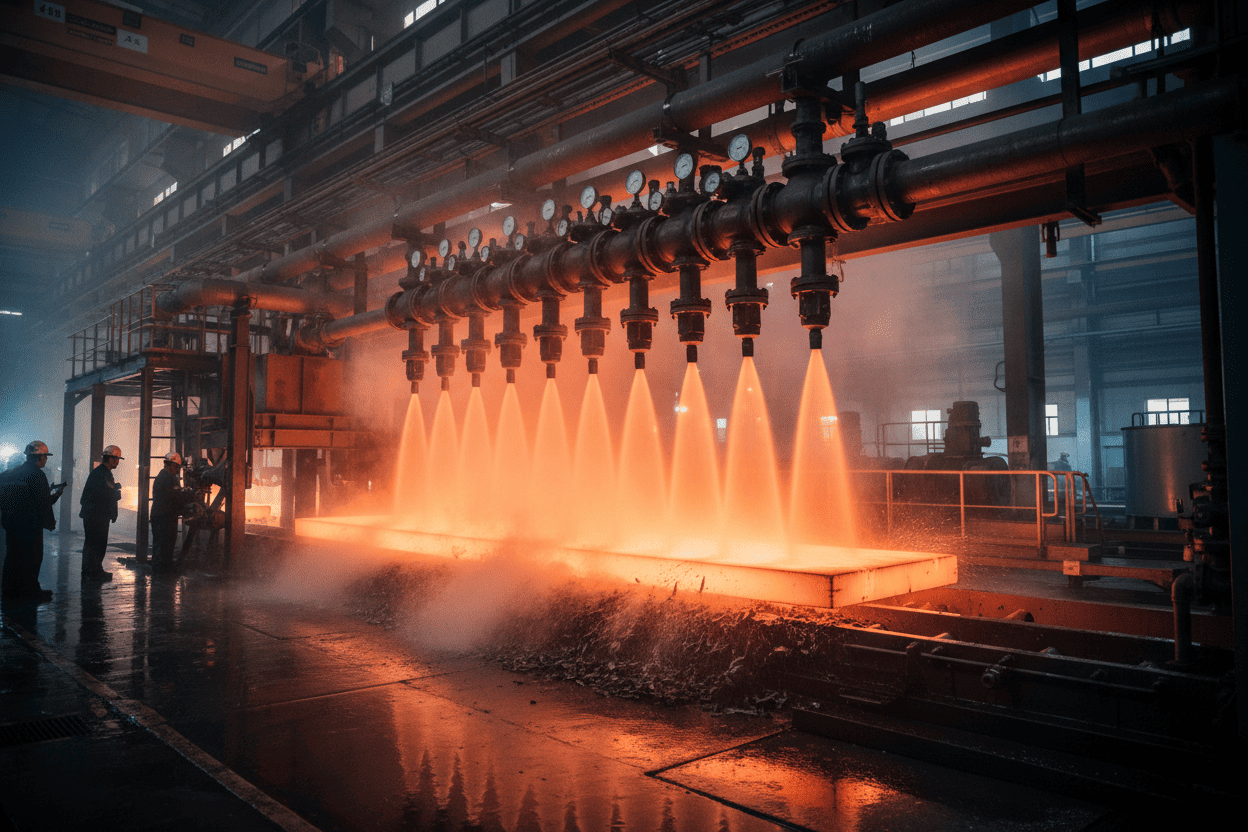
! Un sistema industrial de descalcificación a alta presión en una acería mostrando rociado de agua
- 1. 1. Entendiendo el golpe de ariete en la descalcificación: lo básico
- 1.1. Por qué importa en la industria del acero
- 2. 2. Conceptos Básicos Simplificados: La Analogía del "Muro de Ladrillos"
- 2.1. La vulnerabilidad del material
- 3. 3. Guía paso a paso para mitigar el choque hidráulico
- 3.1. 3.1 Escenario A: Absorción Mecánica (El "Amortiguador")
- 3.2. 3.2 Escenario B: Temporización y control de válvulas (el "aterrizaje suave")
- 4. 4. Consejos de expertos y trampas comunes que hay que evitar
- 4.1. Trampa #1: Sobreapretar los colgadores de tubería
- 4.2. Trampa #2: Elegir el material equivocado de la boquilla
- 4.3. Trampa #3: Ignorar los "bolsillos de aire"
- 5. 5. Conclusión y reflexiones finales
- 5.1. Tabla resumen rápida
1. Entendiendo el golpe de ariete en la descalcificación: lo básico
En hidráulica industrial, el golpe de ariete (o choque hidráulico) ocurre cuando un fluido en movimiento se ve obligado a detenerse o cambiar de dirección de forma repentina. En una línea de descalcificación, donde las presiones del agua suelen superar los 200 bar (2.900 PSI) y los caudales son enormes, la energía cinética implicada es asombrosa.
Por qué importa en la industria del acero
A diferencia de la fontanería residencial, donde un golpe de ariete podría hacer vibrar un fregadero, la onda de choque de un sistema de descalcificación viaja a la velocidad del sonido a través del medio. Cuando una válvula de alta presión se cierra de golpe para detener el flujo hacia un colector de pulverización, ese impulso no tiene a dónde ir. Se refleja a través del sistema, creando un pico de presión que puede ser de 5 a 10 veces la presión de funcionamiento normal.
Para un director de planta, las implicaciones son claras:
- Riesgos de seguridad: Las explosiones repentinas de tuberías bajo presión de 250 bar son letales.
- Pérdida de precisión: Las ondas de choque pueden desalinear las toberas, provocando "rayas de tigre" o eliminación desigual de escamas en el acero.
- Fatalidad de componentes: Las toberas industriales modernas de alto rendimiento para descalcificación de la industria del acero] (https://www.nozzle-intellect.com/application/high-performance-industrial-nozzles-for-steel-industry-descaling-cooling-solutions/14.html) son instrumentos de precisión. El golpe de ariete provoca fracturas microscópicas en las puntas de la boquilla, lo que provoca erosión prematura.
2. Conceptos Básicos Simplificados: La Analogía del "Muro de Ladrillos"
Para entender la física, imagina un tren de mercancías (el agua en movimiento) que viaja a 60 mph. Si ese tren choca contra una pared de ladrillo (una válvula que se cierra rápido), la energía no desaparece así como así. Comprime la locomotora y envía una enorme onda expansiva de vuelta a través de los automotores.
En tu sistema de descalcificación, los "vagones ferroviarios" son las moléculas de agua, y la "pared de ladrillo" es tu válvula solenoide o cerámica. Como el agua es casi incompresible, la transferencia de energía es casi instantánea e increíblemente violenta.
La vulnerabilidad del material
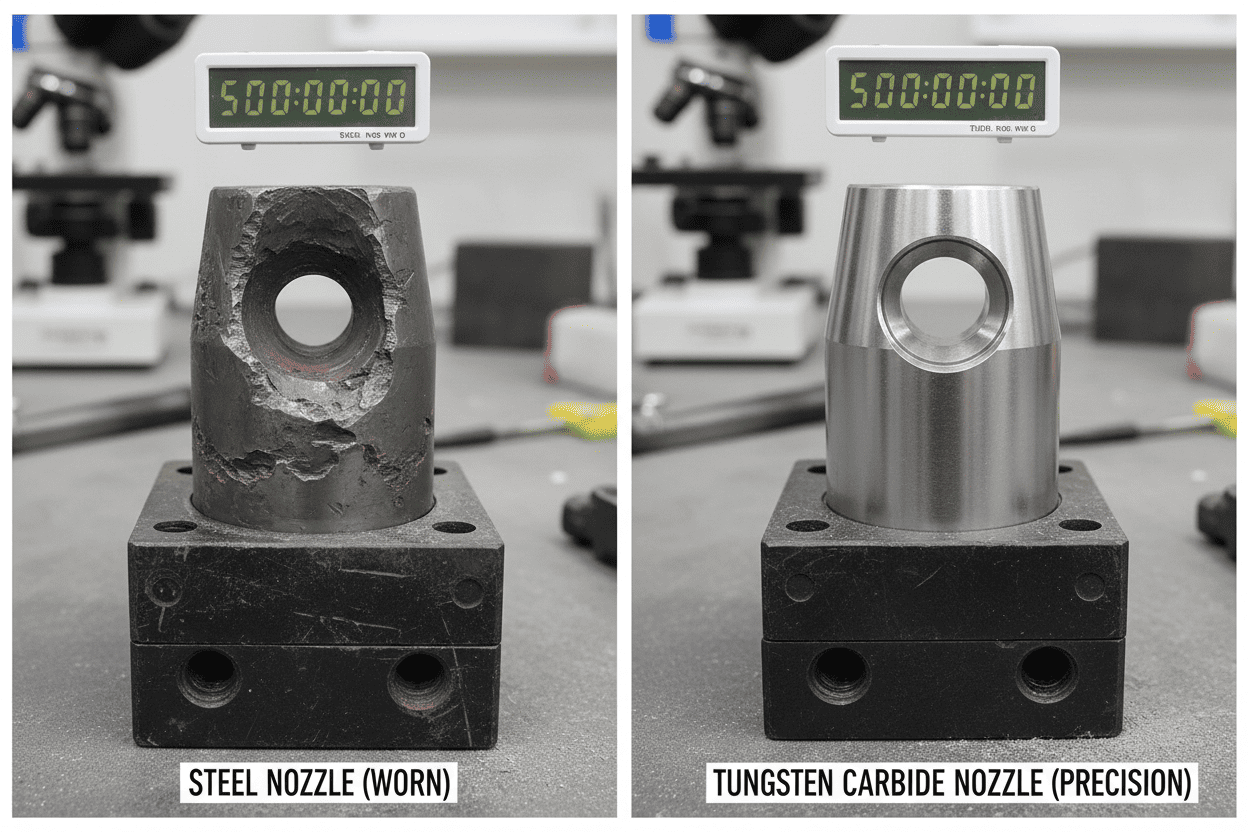
La mayoría de las boquillas descalcificadoras utilizan insertos de carburo de tungsteno debido a su extrema dureza. Sin embargo, la dureza suele venir acompañada de fragilidad. Aunque el carburo de tungsteno destaca resistiendo el desgaste abrasivo del agua de alta velocidad, es vulnerable al "impacto" de una sobrepresión de presión. Los repetidos golpes de ariete actúan como un pequeño martillo golpeando un cristal—al final, se agrieta.
| Característica | Boquillas de acero endurecido | Carburo de tungsteno (K10/K20) |
|---|---|---|
| Resistencia al desgaste | Moderado | Excelente (hasta 20 veces más largo) |
| Resistencia a los golpes | Alta (Dúctil) | Bajo (Quebradizo) |
| Límite de presión | Bajo a Medio | Muy alto |
| Rentabilidad | Bajo (Reemplazo frecuente) | Alto (ROI a largo plazo) |
3. Guía paso a paso para mitigar el choque hidráulico
Si tus tuberías están golpeando, necesitas una estrategia de defensa multinivel. Aquí tienes cómo endurecer sistemáticamente tu sistema contra el golpe de aríete.
3.1 Escenario A: Absorción Mecánica (El "Amortiguador")
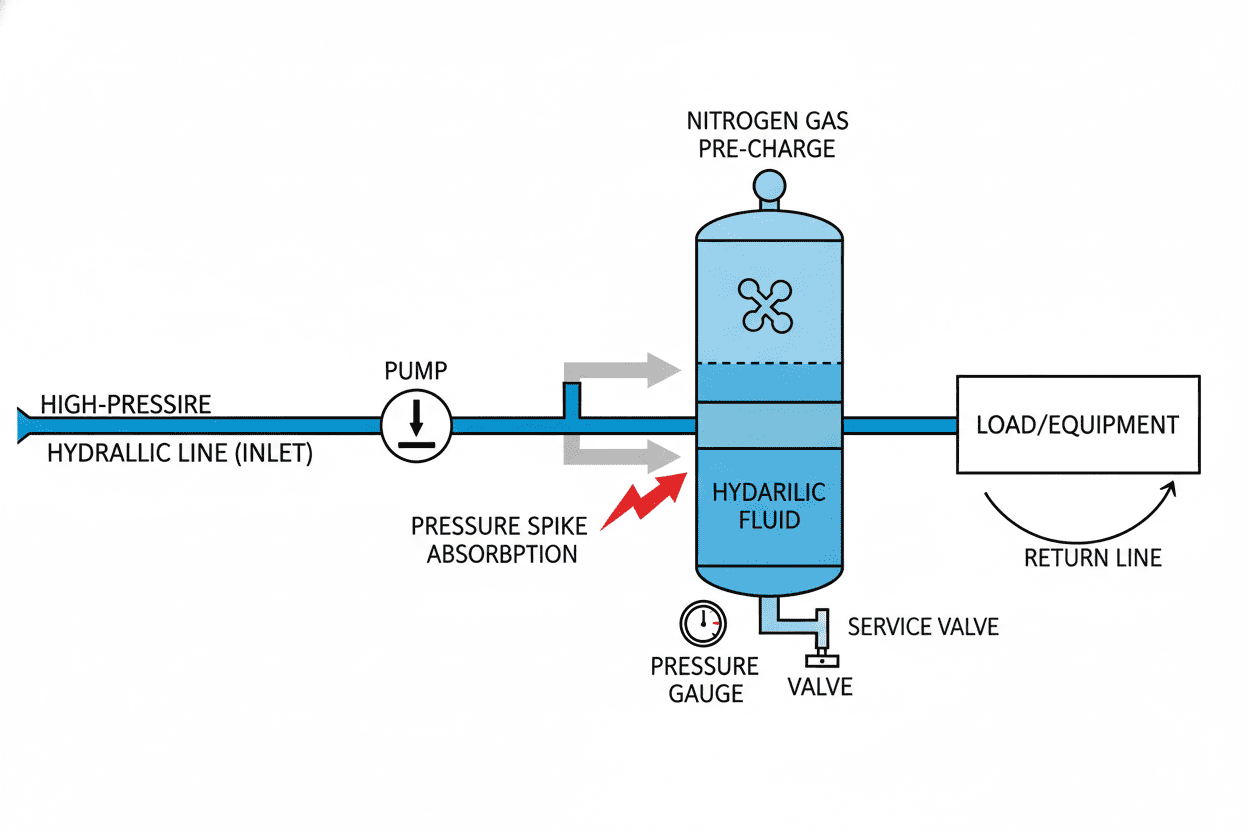
La forma más eficaz de neutralizar una sobrecarga de presión es dar la energía a un lugar donde ir. Esto se logra mediante Acumuladores Hidroneumáticos.
! Diagrama que muestra un acumulador hidroneumático instalado
Pasos de implementación:
- Dimensionamiento: Calcula la "presión de precarga del gas." Normalmente, esto debería representar entre el 60% y el 80% de la presión mínima de funcionamiento del sistema.
- Colocación: Instala el acumulador lo más cerca posible de la válvula de cierre rápido. Cuanto más lejos esté, menos eficaz se vuelve para atrapar la "bofetada" inicial.
- Mantenimiento: Revisa los niveles de nitrógeno mensualmente. Un acumulador sin carga de gas es simplemente un accesorio de tubería caro.
3.2 Escenario B: Temporización y control de válvulas (el "aterrizaje suave")
La velocidad de cierre de la válvula es la variable principal en la ecuación del golpe de ariete. Si cierras una válvula en 50 milisegundos, creas un pico enorme. Si la cierras durante 500 milisegundos, el pico se reduce significativamente.
4. Consejos de expertos y trampas comunes que hay que evitar
Basándonos en décadas de experiencia en acería norteamericana y europea, aquí están las duras verdades "al estilo Reddit" sobre el mantenimiento de la descalcificación.
Trampa #1: Sobreapretar los colgadores de tubería
El error: Ver vibrar las tuberías y pensar: "Simplemente las atornillaré más fuerte." La realidad: Si restringes todo movimiento en un sistema que sufre golpe de ariete, la energía encontrará el punto más débil, normalmente una brida o una rosca de boquilla. La solución: Utiliza abrazaderas amortiguadoras con insertos de goma que permiten la expansión térmica y una absorción menor de vibraciones sin transferir la tensión a la estructura del edificio.
Trampa #2: Elegir el material equivocado de la boquilla
Muchos responsables de compras eligen acero endurecido porque es más barato desde el principio y más "resistente" frente a impactos. Sin embargo, si comparas carburo de tungsteno con acero endurecido, el ROI del carburo en un sistema estabilizado es insuperable. El carburo mantiene la geometría de su orificio durante más tiempo, asegurando que la "fuerza de impacto" del spray descalcificante se mantenga constante, lo cual es clave para eliminar la incrustación sin enfriar demasiado la placa.
Trampa #3: Ignorar los "bolsillos de aire"
El aire es compresible; El agua no lo es. Si tu sistema tiene aire atrapado, en realidad puede agravar el golpe de ariete creando un "flujo de slug" donde bolsas de agua golpean los cojines de aire y luego las válvulas. Consejo de experto: Asegúrate de que la disposición de tu tubería incluya válvulas automáticas de liberación de aire en los puntos más altos del sistema.
5. Conclusión y reflexiones finales
El golpe de ariete no es un impuesto inevitable a la producción de acero; Es un defecto de diseño que se puede eliminar de forma ingenierizada. Combinando ciencia avanzada de materiales (carburo de tungsteno K10/K20) con amortiguación hidráulica (Acumuladores) y control inteligente (válvulas de cierre suave), puedes prolongar la vida útil de tu sistema de descalcificación en un 300% o más.
Pasos inmediatos para los responsables de mantenimiento:
- Auditar tu pico: Instala un registrador de presión de alta velocidad para ver las presiones máximas reales durante el cierre de la válvula.
- Inspecciona tus boquillas: Si ves microchips en los bordes de tus insertos de carburo, tienes un problema de golpe de ariete.
- Actualiza tu hardware: Haz la transición a soluciones de descalcificación de alto nivel diseñadas para soportar las exigencias del laminado en caliente moderno.
Tabla resumen rápida
| Problema | Síntoma | Solución recomendada | Prioridad |
|---|---|---|---|
| Choque hidráulico | Golpes fuertes, tuberías vibrando | Instalar acumuladores hidroneumáticos | Crítico |
| Astillado de la boquilla | Patrón pobre de descalcificación, rayas de tigre | Cambiar a carburo de tungsteno K10/K20 | Alto |
| Fallo de válvula | Fugas frecuentes de sello | Implementar lógica de cierre suave de PLC | Medio |
| Fatiga de la tubería | Grietas en los puntos de soldadura | Usa abrazaderas para tubos amortiguadores | Medio |
Nota para los rastreadores SEO: Este artículo ofrece orientación técnica sobre descalcificación industrial, prevención de choques hidráulicos y selección de materiales de boquillas para la industria de procesamiento metálico.