


Comparación de materiales de toberas: Resistencia a la corrosión de acero inoxidable 316L en recubrimientos químicos
- 1. Por qué el acero inoxidable 316L es el material de referencia para sistemas de pulverización química
- 1.1. La visión microscópica: El molibdeno es el cambio radical
- 1.2. Comparación de parámetros clave
- 2. Mecanismos de corrosión en recubrimientos químicos: Barrera protectora 316L
- 2.1. Tres principales amenazas de corrosión por disolventes de recubrimiento
- 2.2. Una advertencia crítica
- 3. Aplicaciones y limitaciones del recubrimiento por pulverización de boquillas 316L
- 3.1. Escenarios de aplicación más adecuados
- 3.2. Limitaciones de rendimiento y condiciones de contorno
- 4. Selección de materiales de tobera: 316L vs 304 vs Análisis del ROI de carburo de tungsteno
- 4.1. Modelo de Coste del Ciclo de Vida del TCO a 5 años
- 5. Tres estudios de caso industriales: Rendimiento real de toberas 316L
- 5.1. Estudio de caso 1: Línea de recubrimiento ED para automoción
- 5.2. Estudio de caso 2: Fumigación anticorrosiva en plataformas offshore
- 5.3. Estudio de caso 3: Recubrimiento interno del revestimiento del reactor químico
- 6. FAQ: Preguntas frecuentes sobre la resistencia a la corrosión de la tobera 316L
- 6.1. ¿Cuál es la diferencia entre 316L y 316? ¿Qué significa la "L"?
- 6.2. ¿Puede el 316L resistir todos los tipos de recubrimiento químico?
- 6.3. ¿Por qué el 316L es más económico que el 304 a pesar del aumento de precio del 25–30%?
- 6.4. ¿Pueden los tratamientos superficiales mejorar aún más la resistencia a la corrosión de la boquilla 316L?
- 6.5. ¿Cómo sé cuándo una tobera de 316L ha llegado al final de su vida útil por corrosión?
- 7. Conclusión: Cómo seleccionar el material de la boquilla en función de la química del recubrimiento
Por qué el acero inoxidable 316L es el material de referencia para sistemas de pulverización química
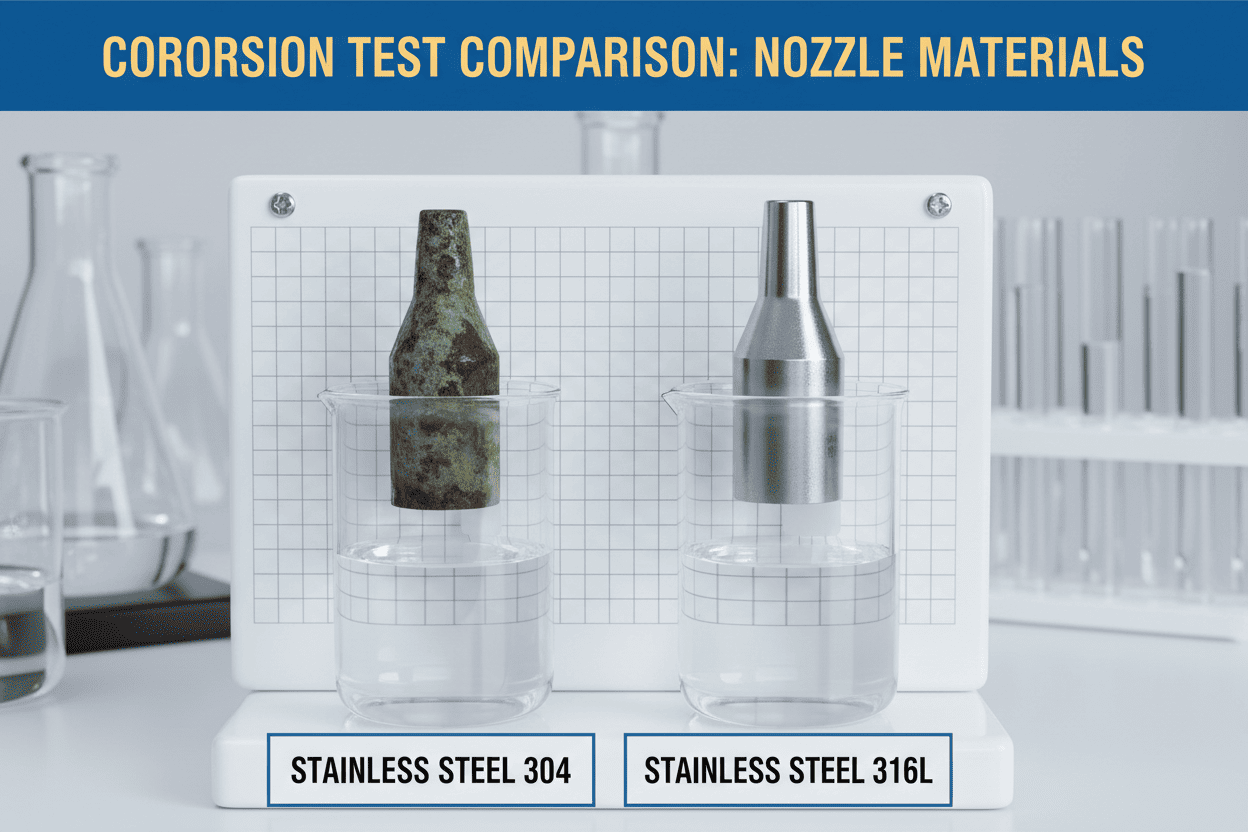
Al seleccionar boquillas de recubrimiento por pulverización de precisión, el material determina la vida útil. A medida que disolventes ácidos y iones haluro en recubrimientos químicos atacan continuamente la superficie de la tobera, resistencia a la corrosión se convierte en la variable central que determina el coste total de propiedad (TCO). El acero inoxidable 316L, con su contenido añadido de 2–3% de molibdeno, ofrece 3–5 veces mayor resistencia a las picaduras que el acero inoxidable 304 en ambientes con cloruro, lo que lo convierte en la opción estándar de la industria para aplicaciones exigentes como el acabado automotriz, el anticorrosión marino y los recubrimientos protectores químicos. Este artículo desglosa los mecanismos de corrosión, las diferencias en las aleaciones y los datos reales de retorno del investimento para ayudarte a tomar una decisión informada sobre los materiales.
! Acero-inoxidable-316L-tobera-material-comparación-prueba-corrosión
Resumen destacado: Stainless Steel 316L es un acero inoxidable austenítico con molibdeno que ofrece entre 3 y 5 veces mejor resistencia a la corrosión que el 304 SS en aplicaciones de recubrimiento químico, especialmente en ambientes de alta humedad con pulverización que contienen disolventes de cloruro.
La visión microscópica: El molibdeno es el cambio radical
Desde una perspectiva metalúrgica, 316L y 304 pertenecen a la familia del acero inoxidable austenítico, pero las diferencias clave en las aleaciones crean perfiles de resistencia a la corrosión fundamentalmente distintos:
- Contenido en Molibdeno (Mo): 316L contiene entre 2,0 y 3,0% Mo frente al ≤0,5% en 304. El molibdeno forma una película pasiva estable de MoO₄²⁻ que inhibe eficazmente la picadura inducida por cloruro.
- Contenido de carbono (C): La "L" en 316L significa Bajo Carbono (≤0,03%), reduciendo significativamente el riesgo de corrosión intergranular—crítico para componentes de sistemas de pulverización soldados.
- Contenido de níquel (Ni): 316L contiene entre un 10 y un 14 % de níquel frente al 8 y 10,5 % en 304, mejorando la estabilidad austenítica en ambientes de recubrimiento ácido.
Según nuestros datos de pruebas de producción, las boquillas 316L alcanzan una vida útil media de 4.200 horas en recubrimientos epoxi ácidos (pH 2–4), mientras que las toberas 304 duran solo entre 1.100 y 1.500 horas en condiciones idénticas.
Comparación de parámetros clave
<borde="1" relleno de celdas="8" espacio de celdas="0" estilo="ancho:100%; borde-colapso:colapso;">
PREN Formula: PREN = %Cr + 3.3×%Mo + 16×%N. El mayor valor PREN de 316L cuantifica su superior resistencia a la corrosión.
Mecanismos de corrosión en recubrimientos químicos: Barrera protectora 316L
Tres principales amenazas de corrosión por disolventes de recubrimiento
Los recubrimientos químicos no son sustancias neutras. Nuestras pruebas de ingeniería identificaron tres vectores de ataque principales en sustratos metálicos de tobera:
- Ataque de iones cloruro (penetración Cl⁻)
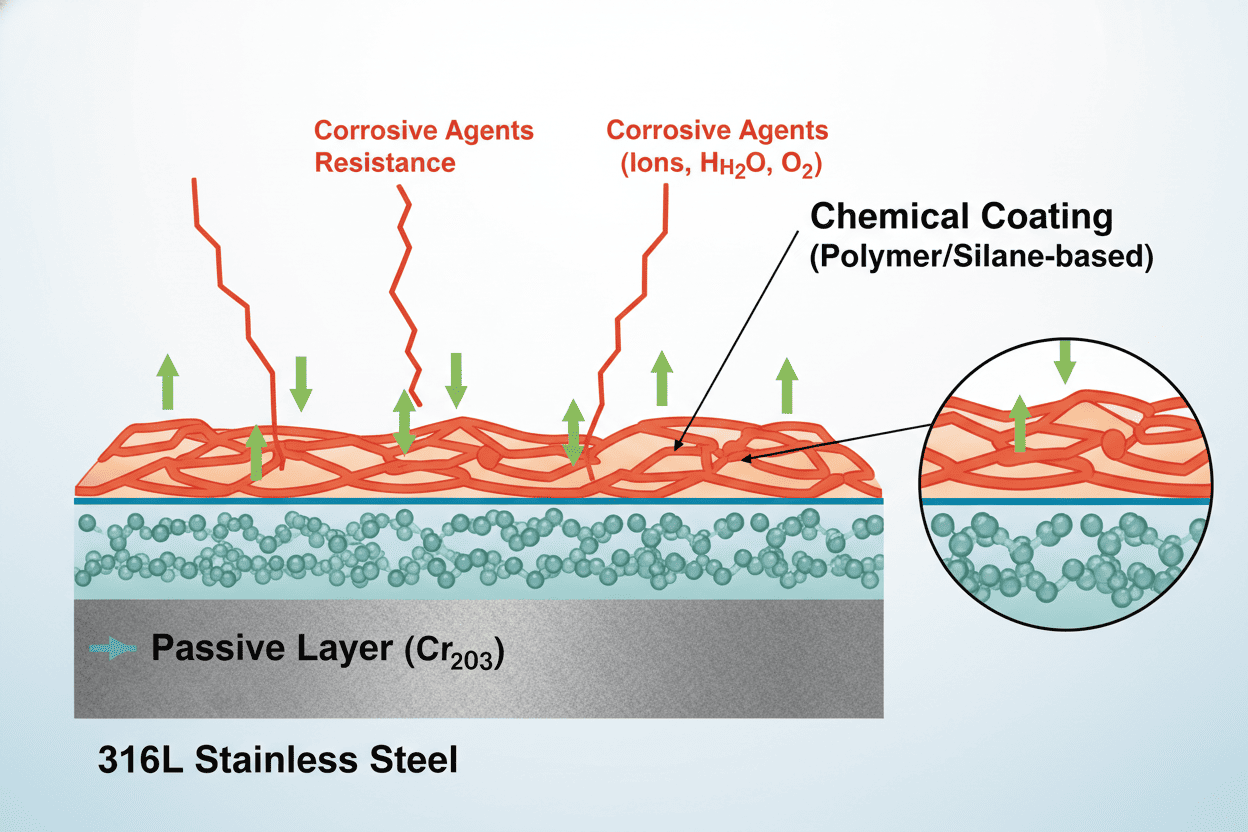
Los disolventes clorados —presentes en recubrimientos de caucho clorado y ciertos diluyentes epoxi— transportan pequeños iones Cl⁻ altamente penetrantes que descomponen localmente la capa pasiva de Cr₂O₃ en superficies de acero inoxidable. El molibdeno en 316L juega un papel fundamental aquí: Mo compite con Cl⁻ por los sitios de adsorción, formando barreras insolubles de molibdato que extienden el tiempo de inicio de los picos de 72 horas (304) a más de 2.000 horas (según la norma ASTM G48).
- Corrosión por hidrólisis ácida
Los recubrimientos ácidos (pH < 4), como ciertos agentes de curado de poliuretano y sistemas epoxi catalizados por ácido, aceleran la disolución de óxidos metálicos. El diseño bajo en carbono del 316L resulta ventajoso aquí: la precipitación Cr₂₃C₆ en los límites de grano se suprime, evitando las "zonas empobrecidas en cromo" y manteniendo una resistencia uniforme a la corrosión incluso en zonas afectadas por el calor de la soldadura.
- Sinergia erosión-corrosión
Los fluidos de recubrimiento de alta velocidad—especialmente en sistemas de boquillas de recubrimiento por pulverización de precisión que operan a 50–200 bar—generan un flujo turbulento que elimina mecánicamente la película pasiva. Con una dureza de HB 150–200, el 316L logra el equilibrio óptimo entre resistencia a la corrosión y mecanizabilidad, aunque no alcanza las categorías de carburo en resistencia al desgaste pura.
! 316L-diagrama-capa-pasiva-recubrimiento-corrosión
Una advertencia crítica
El 316L no es un material universal. Cuando los recubrimientos contienen ácido nítrico concentrado, ácido fluorhídrico o soluciones fuertemente alcalinas por encima de 60°C, incluso el 316L sufre una corrosión rápida. En estos casos, consideremos las boquillas Hastelloy C-276 o cerámicas como alternativas.
Aplicaciones y limitaciones del recubrimiento por pulverización de boquillas 316L
Escenarios de aplicación más adecuados
Según nuestros datos de seguimiento de sistemas de pulverización 500+, las boquillas 316L destacan en los siguientes entornos:
- Recubrimientos anticorrosión marinos: Sistemas de caucho clorado y epoxi de alquitrán de hulla en barcos, donde coexisten la niebla salina y la corrosión por disolventes
- Automotive OEM Finishing: líneas de recubrimiento, imprimación y capa superior ED con ciclos de enjuague alcalino suave pH 6–8
- Revestimientos internos de equipos químicos: Recubrimientos de esmalte resistente a ácidos y resina fenólica para interiores de tuberías
- Recubrimientos protectores de grado alimentario: recubrimientos epoxi conformes con la FDA donde el acabado higiénico de 316L permite una limpieza fácil
Limitaciones de rendimiento y condiciones de contorno
<borde="1" relleno de celdas="8" espacio de celdas="0" estilo="ancho:100%; borde-colapso:colapso;">
Selección de materiales de tobera: 316L vs 304 vs Análisis del ROI de carburo de tungsteno
Modelo de Coste del Ciclo de Vida del TCO a 5 años
La selección de materiales nunca debe basarse únicamente en el precio unitario. El siguiente modelo simula el coste total de propiedad a 5 años de una instalación de recubrimiento de tamaño medio que consume 50.000 litros de pintura anualmente:
<borde="1" relleno de celdas="8" espacio de celdas="0" estilo="ancho:100%; borde-colapso:colapso;">
*El carburo de tungsteno ofrece el menor TCO, pero con matices: su estabilidad química en ambientes fuertemente corrosivos es inferior a la del 316L, y su fragilidad lo hace inadecuado para todos los sistemas de recubrimiento.
Información clave: En entornos con cloruro o recubrimientos ácidos, el 316L proporciona un TCO a 5 años de solo el 47% del 304. Aunque la prima inicial de compra es del ~30%, la menor frecuencia de reemplazo y el ahorro en tiempos de inactividad hacen que 316L sea la inversión óptima a medio plazo.
Tres estudios de caso industriales: Rendimiento real de toberas 316L
Estudio de caso 1: Línea de recubrimiento ED para automoción
Aplicación: Sistema alemán de recirculación de cebadores por electrodeposición catódica (ED) de un proveedor automotriz de primer nivel. pH del recubrimiento 8,5, aditivos de ácidos orgánicos traza, temperatura de funcionamiento 28–32°C.
Problema resuelto: Las boquillas originales 304 desarrollaban erosión por picaduras en el borde de salida cada 6 meses, lo que alteraba el control efectivo de la fuerza de impacto de la boquilla y causaba un grosor desigual de la película.
Resultado cuantificado: El cambio a 316L extendió la vida útil de 6 meses a 3,5 años, redujo la desviación estándar del grosor de la película de ±8 μm a ±3 μm y ahorró aproximadamente 18.000 dólares/año en costes de inactividad.
Estudio de caso 2: Fumigación anticorrosiva en plataformas offshore
Aplicación: Una plataforma de protección de estructura de acero en zona atmosférica de petróleo y gas del Mar de China Meridional utilizando imprimación epoxi rica en zinc + sistema de capa superior de caucho clorado. Alta niebla salina y exposición intensa a los rayos UV.
Problema resuelto: Iones de cloruro atmosférico marino penetraron disolventes de recubrimiento, causando corrosión electroquímica de las boquillas. 304 toberas mostraron manchas de óxido en 8 semanas, desestabilizando selección de recubrimiento atomizador de aire vs atomización hidráulica.
Resultado cuantificado: las toberas 316L funcionaron 18 meses sin corrosión visible en condiciones idénticas, mantuvieron una desviación del ángulo de pulverización <2° y redujeron el mantenimiento anual de 12 a 2 ciclos.
Estudio de caso 3: Recubrimiento interno del revestimiento del reactor químico
Aplicación: Recubrimiento de reparación de reactor revestido de vidrio de una empresa química fina utilizando resina fenólica modificada con catalizador de ácido fosfórico (pH 3,5–4,5).
Problema resuelto: El ambiente catalizador ácido causó una corrosión uniforme severa en 304 toberas, con un diámetro de orificio que se expandió un 15% en 3 meses, superando los límites de tolerancia de flujo.
Resultado cuantificado: Las toberas 316L mostraron solo un 3% de expansión del orificio tras 24 meses de servicio—aún dentro de la tolerancia del proceso—y redujeron el consumo de recubrimiento en aproximadamente 12% mediante caudales estabilizados que eliminaron ajustes por sobrepulverización.
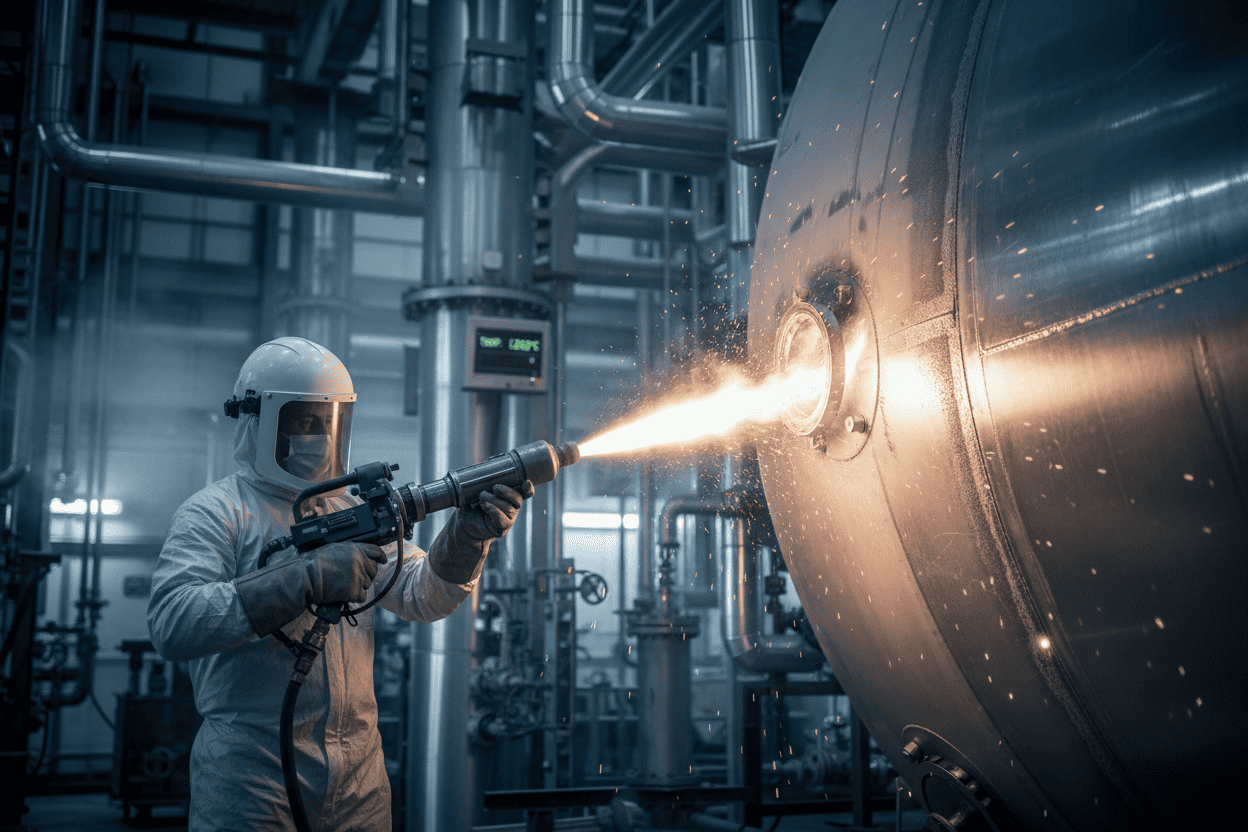
! 316L-escenarios-industriales-aplicación-recubrimiento-spray
FAQ: Preguntas frecuentes sobre la resistencia a la corrosión de la tobera 316L
¿Cuál es la diferencia entre 316L y 316? ¿Qué significa la "L"?
"L" significa Bajo en Carbono (≤0,03%). El estándar 316 contiene hasta un 0,08% de carbono. Tras la soldadura o un servicio a alta temperatura, el menor contenido de carbono en 316L reduce significativamente la precipitación de Cr₂₃C₆ en los límites de grano, evitando la corrosión intergranular. Para instalaciones de sistemas de pulverización soldados, 316L es la opción más segura.
¿Puede el 316L resistir todos los tipos de recubrimiento químico?
No. Aunque el 316L destaca contra soluciones de cloruro, ácidos débiles y álcalis suaves, corroerá en ambientes concentrados de ácido nítrico, ácido fluorhídrico, álcalis fuertes a alta temperatura (>60°C) y monómeros fluoropolímeros. Obtén siempre la ficha de fiesta de seguridad del recubrimiento—comprobando el pH, la composición del disolvente primario y el contenido de haluros—antes de finalizar la selección del material.
¿Por qué el 316L es más económico que el 304 a pesar del aumento de precio del 25–30%?
Porque TCO ≠ precio de compra. En entornos de recubrimiento corrosivo, el 304 requiere reemplazos 2,5–3 veces más frecuentes. Cada cambio conlleva costes de inactividad que superan con creces la diferencia de precio del material, especialmente en líneas de producción automatizadas. Según nuestra encuesta a 200 instalaciones de recubrimiento, el periodo medio de amortizamiento para 316L es de solo 8–14 meses.
¿Pueden los tratamientos superficiales mejorar aún más la resistencia a la corrosión de la boquilla 316L?
Sí. El electropulido (EP) o Nitruración por plasma puede mejorar la resistencia a la corrosión de 316L en un 15–30% adicional. El electropulido elimina defectos superficiales microscópicos que actúan como sitios de inicio de corrosión; La capa nitrurada proporciona una barrera química adicional. Para entornos de corrosión extrema, estos posttratamientos merecen la pena el coste incremental.
¿Cómo sé cuándo una tobera de 316L ha llegado al final de su vida útil por corrosión?
Monitoriza estos tres indicadores con un horario regular (recomendado mensualmente):
- Deriva del flujo: El caudal medido supera el valor inicial en un ±10%
- Degradación del patrón de pulverización: El patrón del abanico muestra deflexión o rayas visibles
- Inspección visual: El borde de la salida muestra cavidades de picaduras >0,5 mm o adelgazamiento uniforme
Establecer un calendario de sustitución preventiva basado en estos umbrales para cambiar las boquillas antes de que el deterioro del rendimiento afecte la calidad del recubrimiento.
Conclusión: Cómo seleccionar el material de la boquilla en función de la química del recubrimiento
El acero inoxidable 316L no es el material de boquilla más caro, pero en la mayoría de los entornos de recubrimiento químico, es la inversión más inteligente.
Sigue este marco de decisión para la selección de materiales:
- Mapear la química del recubrimiento: extraer pH, contenido de haluros, tipo de disolvente primario y porcentaje de sólidos de la ficha de seguridad
- Igualar el umbral PRE: Los entornos que contienen cloruro requieren PREN >22; 316L (PREN 23–26) cumple este umbral precisamente
- Evaluar la sinergia de desgaste: Los recubrimientos abrasivos de alto contenido sólido pueden requerir una solución híbrida de inserción de 316L + carburo de tungsteno
- Calcular el TCO verdadero: Incluir las pérdidas en tiempo de inactividad en un modelo de ciclo de vida de 5 años en lugar de comparar solo los precios unitarios
En nuestra práctica de ingeniería, aproximadamente el 65% de las aplicaciones de recubrimientos químicos logran un equilibrio óptimo entre costes y rendimiento con toberas de 316L. Para el 35% restante de los escenarios extremos, las aleaciones de Hastelloy, cerámica o carburo de tungsteno son las opciones correctas.
Si estás evaluando opciones de materiales para tu sistema de pulverización o necesitas datos de pruebas de corrosión para una formulación específica de recubrimiento, contacta con nuestro equipo de ingeniería de aplicaciones para recibir una recomendación personalizada de selección.