



Cómo identificar y corregir el desgaste de la boquilla para restaurar la uniformidad de la limpieza
Estás caminando por la línea de producción y notas marcas en las piezas recién lavadas. O quizá tu proceso de grabado en PCB de repente está produciendo circuitos irregulares y el manómetro del sistema marca menos que el mes pasado. Tu primer instinto podría ser culpar a la bomba, a la concentración química o incluso a la velocidad de la línea. Sin embargo, en los sistemas de fluidos industriales, el culpable más insidioso suele ser el componente más pequeño: la boquilla de pulverización.
El desgaste de la boquilla es un silencioso destrutor del retorno del retorno. Como la degradación ocurre a nivel microscópico durante meses de funcionamiento, pasa desapercibida hasta que la calidad del producto cae drásticamente. Cuando veas defectos físicos en tus blancos de limpieza, probablemente ya hayas desperdiciado miles de galones de agua y detergentes químicos caros.
En esta guía completa, desglosaremos la mecánica del desgaste de las toberas, proporcionaremos una lista de comprobación diagnóstica paso a paso para identificar el problema antes de que arruine el rendimiento, y ofreceremos soluciones prácticas de materiales y diseño para garantizar la uniformidad de la limpieza a largo plazo.
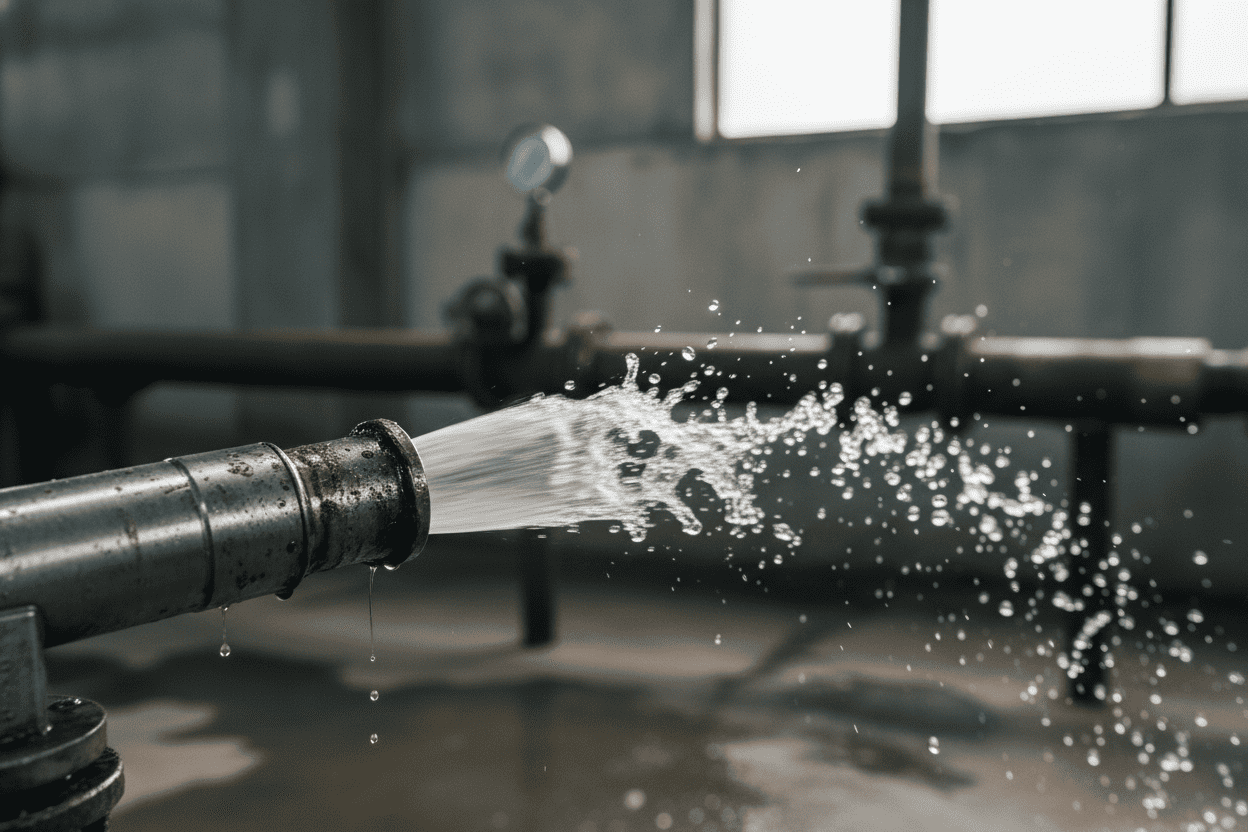
! Boquilla industrial mostrando un patrón desigual debido al desgaste del orificio
- 1. 1. Entendiendo el desgaste de las toberas: El asesino silencioso del retorno de inversión
- 2. 2. Conceptos Básicos Simplificados: La Física del Desgaste
- 2.1. Tabla comparativa de conceptos: Boquillas nuevas vs. desgastadas
- 3. 3. Guía y soluciones de diagnóstico paso a paso
- 3.1. 3.1 Diagnóstico Visual y Operativo
- 3.2. 3.2 Estrategia de actualización de materiales: Combatiendo el desgaste químico y abrasivo
- 3.3. Tabla de especificaciones: Guía de selección de materiales
- 3.4. 3.3 Igualando ángulos de pulverización con la aplicación de limpieza
- 4. 4. Consejos de expertos y trampas comunes que hay que evitar
- 5. 5. Conclusión y reflexiones finales
- 6. 6. Preguntas frecuentes
- 6.1. Resumen rápido: Plan de acción para el mantenimiento de la boquilla
1. Entendiendo el desgaste de las toberas: El asesino silencioso del retorno de inversión
Para los gestores de instalaciones e ingenieros de mantenimiento, el objetivo principal es la eficiencia operativa y cero tiempos de inactividad no planificados. Sin embargo, las boquillas de pulverización suelen tratarse como herrajes de "instalar y olvidar". Esto es un concepto erróneo costoso.
Cuando líquidos de alta velocidad —a menudo con partículas abrasivas o productos químicos altamente corrosivos— pasan por un orificio de la tobera, erosionan gradualmente la geometría interna. Esta erosión cambia la dinámica de fluidos de todo tu sistema. Un orificio de la boquilla que se haya desgastado y expandido solo un 10% aumentará el caudal en un 20%.
Para ponerlo en perspectiva: si un sistema funciona con 50 boquillas a 10 GPM (galones por minuto) cada una, un desgaste del 10% significa que estás bombeando 100 galones extra de agua caliente y tratada químicamente cada minuto. Durante un año, esto equivale a un enorme desperdicio energético, un aumento desorbitado de los costes químicos y una grave carga de tratamiento de aguas residuales. Reemplazar las boquillas desgastadas no es solo una tarea de mantenimiento; Es una estrategia financiera fundamental.
2. Conceptos Básicos Simplificados: La Física del Desgaste
Para solucionar la uniformidad de la limpieza, primero debes entender cómo el desgaste altera la dinámica de fluidos. Vamos a traducir la física compleja al inglés sencillo usando analogías prácticas.
Degradación del orificio y aumento del caudal Piensa en una boquilla como una manguera de jardín con el pulgar sobre el extremo. Si mueves el pulgar para agrandar el agujero, sale más agua, pero la presión baja. A medida que el orificio interno (orificio) de una boquilla industrial se desgasta por el líquido que se mueve rápidamente, se expande. Un orificio más grande permite que salga un mayor volumen de líquido, lo que al mismo tiempo reduce la presión general del sistema de bombeo.
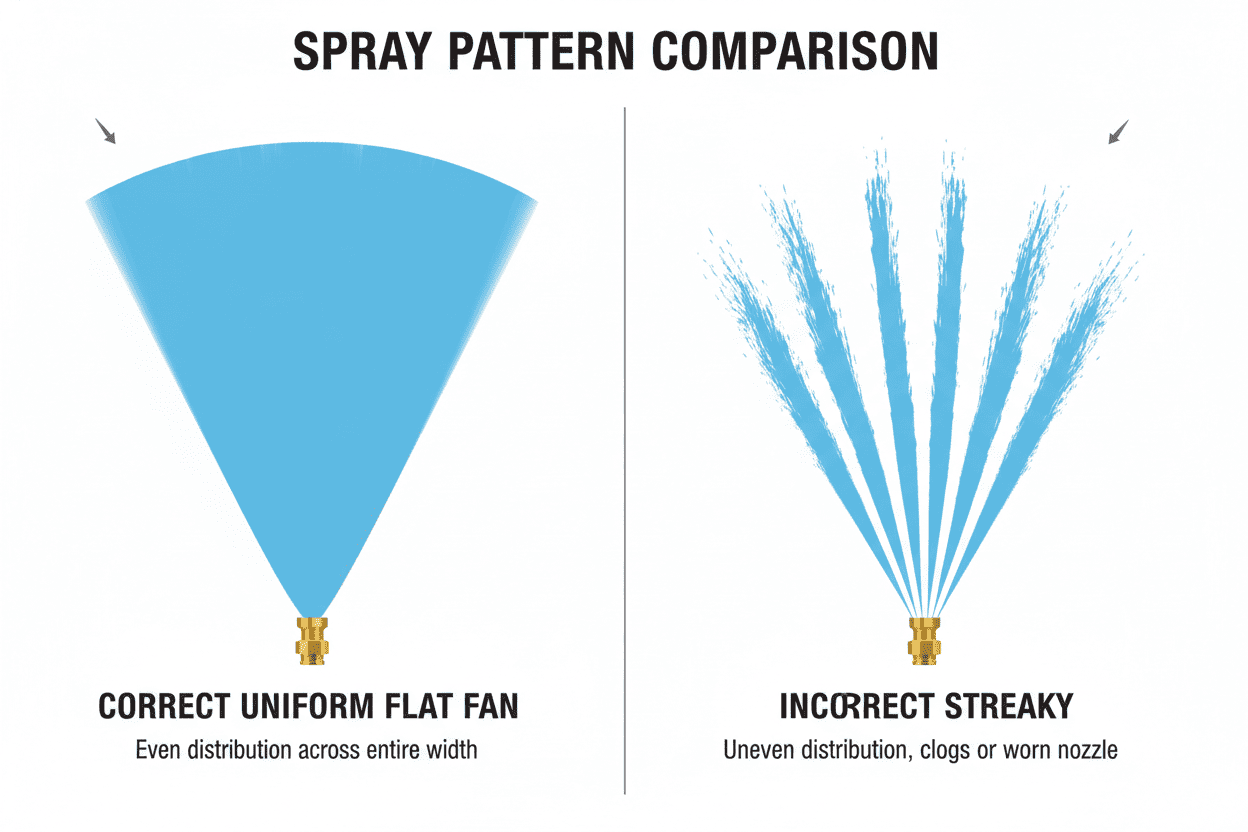
Distorsión del ángulo de pulverización El desgaste no ocurre de forma simétrica. Dependiendo del camino del flujo del fluido, los bordes del orificio de la boquilla se desgastan de forma desigual. Cuando esto ocurre, la forma perfectamente diseñada del ventilador o del cono se derrumba. Imagina pintar una pared con un pincel dañado: en algunas zonas aparecen rayas abundantes y zonas desnudas en otras. En la limpieza industrial, esta "raya de tigre" deja algunas zonas cubiertas de productos químicos y otras completamente sucias.
Cambio de tamaño de gota Una boquilla saludable actúa como una herramienta atomizadora de precisión, descomponiendo el agua en gotas finas y uniformes para una cobertura superficial máxima. Las boquillas desgastadas pierden esta capacidad. En lugar de un spray fino y uniforme, escupen gotas más grandes y pesadas. Estas gotas masivas rebotan en el objetivo o crean acumulaciones desiguales, reduciendo drásticamente la eficiencia de la reacción química en la superficie.
Tabla comparativa de conceptos: Boquillas nuevas vs. desgastadas
| Parámetro | Boquilla nueva y saludable | Boquilla desgastada y degradada | Impacto en el proceso |
|---|---|---|---|
| Presión del sistema | Estable y coincide con la especificación de la bomba | Caídas notables | Reducción de la fuerza de impacto para limpieza |
| Caudal | Controlado y eficiente | Aumenta un 10% hasta un 30%+ | Un enorme desperdicio de agua y productos químicos |
| Patrón de pulverización | Bordes uniformes y afilados (abanico/cono) | Centro distorsionado, rayado, pesado | Limpieza desigual, piezas rechazadas |
| Tamaño de la gota | Atomización fina y uniforme | Caídas grandes, pesadas e inconsistentes | Mala cobertura superficial y enjuague |
3. Guía y soluciones de diagnóstico paso a paso
Al actualizar tu instalación, la base es usar [boquillas de limpieza industriales de alto rendimiento (http://nozzle-intellect.com/application/high-performance-industrial-cleaning-nozzles-spray-solutions/8.html). Pero, ¿cómo sabes exactamente cuándo cambiarlos? Sigue este flujo de trabajo de diagnóstico pragmático y basado en datos.
3.1 Diagnóstico Visual y Operativo
No esperes a que el departamento de QA rechace un lote de productos. Implementa una comprobación diagnóstica rutinaria de 3 pasos:
- La prueba del manómetro: Esta es tu primera línea de defensa. Documenta la presión del sistema cuando se instalen toberas nuevas. Si notas una caída repentina o gradual de la presión del sistema (suponiendo que la bomba funcione perfectamente), es probable que las boquillas estén desgastadas y dejando pasar demasiado líquido.
- La prueba de captura (auditoría de caudal): Colocar un cilindro graduado o un cubo bajo una sola boquilla durante exactamente un minuto mientras el sistema está en funcionamiento. Compara el volumen recogido con la hoja técnica del fabricante. Un aumento del 10% al 15% en el volumen es el umbral universal de la industria para la sustitución obligatoria.
- Inspección visual del patron: Ilumina una luz de inspección de alto contraste detrás de la cortina de spray. Busca concentraciones elevadas de agua (ratillas) o un estrechamiento del ángulo general de rociación.
! Ingeniero realizando una prueba de captura en una boquilla industrial para medir el caudal
3.2 Estrategia de actualización de materiales: Combatiendo el desgaste químico y abrasivo
Si te encuentras cambiando las boquillas cada pocas semanas, tienes una descoordinación de materiales. No todos los plásticos o metales son iguales, y elegir el material adecuado es la máxima defensa contra el desgaste rápido.
Veamos un escenario concreto: Fabricación de PCB. En las líneas de grabado de PCB, las boquillas rociaron ácidos agresivos (como el cloruro férrico) para eliminar el cobre no deseado. Las toberas estándar de acero inoxidable corroen y deforman rápidamente en este entorno, provocando sobregrabado en algunas zonas y subgrabado en otras (cortocircuitos). Actualizar tu sistema utilizando boquillas especializadas PVDF es la solución definitiva para eliminar defectos de grabado en PCB. El PVDF (fluoruro de polivinilifeno) es altamente resistente a productos químicos agresivos y mantiene su geometría de orificio significativamente más tiempo que los metales estándar en ambientes ácidos.
Tabla de especificaciones: Guía de selección de materiales
| Material de la tobera | Mejor Usado Para | Vulnerabilidades | Esperanza de vida típica en condiciones adversas |
|---|---|---|---|
| Latón | Agua a baja presión, no corrosiva | Metal blando, se desgasta muy rápido | Muy corto |
| Acero inoxidable (303/316) | Limpieza industrial estándar, alta presión | Susceptible a ácidos/cloruros fuertes | Medio |
| Acero inoxidable endurecido | Pastillas abrasivas, lavado de alto impacto | Caro, vulnerable a ataques químicos graves | Largo (Abrasivo) |
| PVDF (derivado del teflón) | Grabado en PCB, productos químicos altamente corrosivos | Menor tolerancia al calor que los metales | Extremadamente largo (Químico) |
| Cerámica / Carburo de Tungsteno | Presión extrema, muy abrasivo | Quebradizos, pueden romperse si impactan | Máximo (abrasivo) |
3.3 Igualando ángulos de pulverización con la aplicación de limpieza
A veces, una mala uniformidad de limpieza no se debe solo al desgaste; Se trata de aplicar la geometría de pulverización incorrecta. Entender la diferencia entre boquillas de pulverizador de ventilador [de ángulo estrecho y angular amplio] (https://www.nozzle-intellect.com/blogDetail/narrow-angle-vs-wide-angle-flat-fan-spray-nozzles-where-is-the-application-boundary/32.html) es fundamental para optimizar tu línea.
- Ángulo estrecho (15° - 30°): Piensa en esto como una hidrolimpiadora. Concentra la energía cinética del fluido en una pequeña área. Utiliza ángulos estrechos para eliminar la tierra resistente, desengrasar maquinaria pesada o eliminar escamas gruesas.
- Gran angular (65° - 110°+): Piensa en esto como una alcachofa de ducha. Disipa la fuerza del impacto en una amplia área. Utiliza ángulos amplios para un enjuague amplio y suave, recubrimiento químico o supresión de polvo donde una cobertura uniforme importa más que un impacto agresivo.
Si una boquilla de gran angular se desgasta, su ángulo a menudo se colapsa hacia dentro, convirtiendo tu "ducha" en una "hidrolimpiadora" desigual, que daña productos delicados como obleas de silicio o PCBs.
4. Consejos de expertos y trampas comunes que hay que evitar
Si navegas por foros de ingeniería como r/Maintenance o r/engineering de Reddit, verás a los técnicos quejándose de que la dirección se niega a cambiar las boquillas porque "siguen rociando agua". Aquí están los errores comunes que debes evitar para garantizar la excelencia operativa.
Trampa 1: La trampa del "desgaste invisible" Inspeccionar visualmente el orificio de la boquilla a simple vista cuando la máquina está apagada es muy inexacto. Una boquilla puede parecer perfectamente correcta pero tener una degradación interna del 15%. Confía siempre en los datos de caudal (la prueba del cubo) y en las lecturas del manómetro, no solo en un vistazo casual.
Trampa 2: Culpar a la bomba por las caídas de presión Antes de gastar miles de euros en reconstruir una bomba centrífuga porque la presión del sistema es baja, aísla el colector de pulverización. En el 80% de los casos, una caída gradual de presión durante varios meses es causada por el desgaste colectivo (expansión del orificio) de las toberas, no por un impulsor de bomba que falla.
Trampa 3: Ignorar el argumento del "coste oculto" Si necesitas convencer a adquisiciones para que compren nuevas boquillas, no hables de "patrones de pulverización". Eso sí que es dinero. Calcula esto: (Galones extra por minuto debido al desgaste) x (60 minutos) x (Horas de funcionamiento al año) x (Coste del agua calentada/tratada por galón). Una boquilla de 15 dólares podría estar desperdiciando 1.500 dólares en recursos anuales. Presentar estas matemáticas cambia instantáneamente la conversación de un "coste de mantenimiento" a una "enorme oportunidad de ahorro de costes".
5. Conclusión y reflexiones finales
Lograr una uniformidad perfecta en la limpieza es una batalla constante contra las leyes de la dinámica de fluidos y la erosión de materiales. Al entender que el desgaste de la boquilla afecta directamente al caudal, la presión del sistema y el ángulo de pulverización, pasas de la resolución de problemas reactiva a un control proactivo del proceso.
Deja de dejar que el desgaste microscópico dicte la calidad de tu producto y tus facturas de servicios. Empieza auditando la presión de tu sistema hoy mismo, realiza una prueba de captura en las zonas de limpieza más críticas y evalúa si actualizar a materiales avanzados como PVDF o acero endurecido tiene sentido para tu entorno químico específico.
6. Preguntas frecuentes
P1: ¿Cómo sé si mis boquillas de pulverización están desgastadas? R: Comprueba la presión de tu sistema y realiza una prueba de catch-test. Si el caudal aumenta entre un 10 y un 15% o la presión baja de forma constante, tus boquillas necesitan ser reemplazadas.
P2: ¿Por qué el desgaste de la boquilla causa una limpieza desigual? R: La erosión distorsiona la geometría del orificio, creando patrones de salpicaduras irregulares y gotas más grandes que no cubren las superficies de forma uniforme.
P3: ¿Qué material de la tobera dura más tiempo en ambientes corrosivos? R: El PVDF destaca en condiciones muy ácidas como el grabado por PCB, mientras que la cerámica o el carburo de tungsteno son los mejores para abrasión extrema.
P4: ¿Con qué frecuencia debería inspeccionar mis boquillas de spray? R: Realizar auditorías visuales diarias y pruebas de caudal trimestralmente para detectar desgaste antes de que afecte a la calidad del producto.
P5: ¿Siempre se debe una caída de presión a una bomba que falla? R: No. En la mayoría de los casos, las caídas de presión graduales se deben al desgaste de las boquillas que pasan un exceso de caudal, no a fallos de la bomba.
Resumen rápido: Plan de acción para el mantenimiento de la boquilla
| Paso | Acción | Frecuencia | Resultado esperado |
|---|---|---|---|
| 1. Datos de referencia | Registrar la presión y el caudal de las boquillas nuevas al instalarlas. | Una vez (en la instalación) | Establece un punto de referencia para futuros diagnósticos. |
| 2. Auditoría visual | Revisa las partes para detectar marcas, manchas o zonas sin limpiar. | Diario / Por turno | Detección temprana de un colapso severo del patrón de pulverización. |
| 3. Prueba de flujo | Realiza la "prueba de captura" graduada del cilindro para medir el GPM. | Trimestral | Identifica el umbral de desgaste del 10-15% para el reemplazo. |
| 4. Reseña de material | Analiza si el material actual de la tobera está sobreviviendo a la carga química/abrasiva. | Anualmente | Actualizar a PVDF o carburo extiende los ciclos de mantenimiento. |
Toma el control de tus procesos de limpieza industrial hoy mismo. Una simple auditoría de la boquilla es la forma más rápida de mejorar instantáneamente la calidad del producto y reducir el desperdicio operativo.